
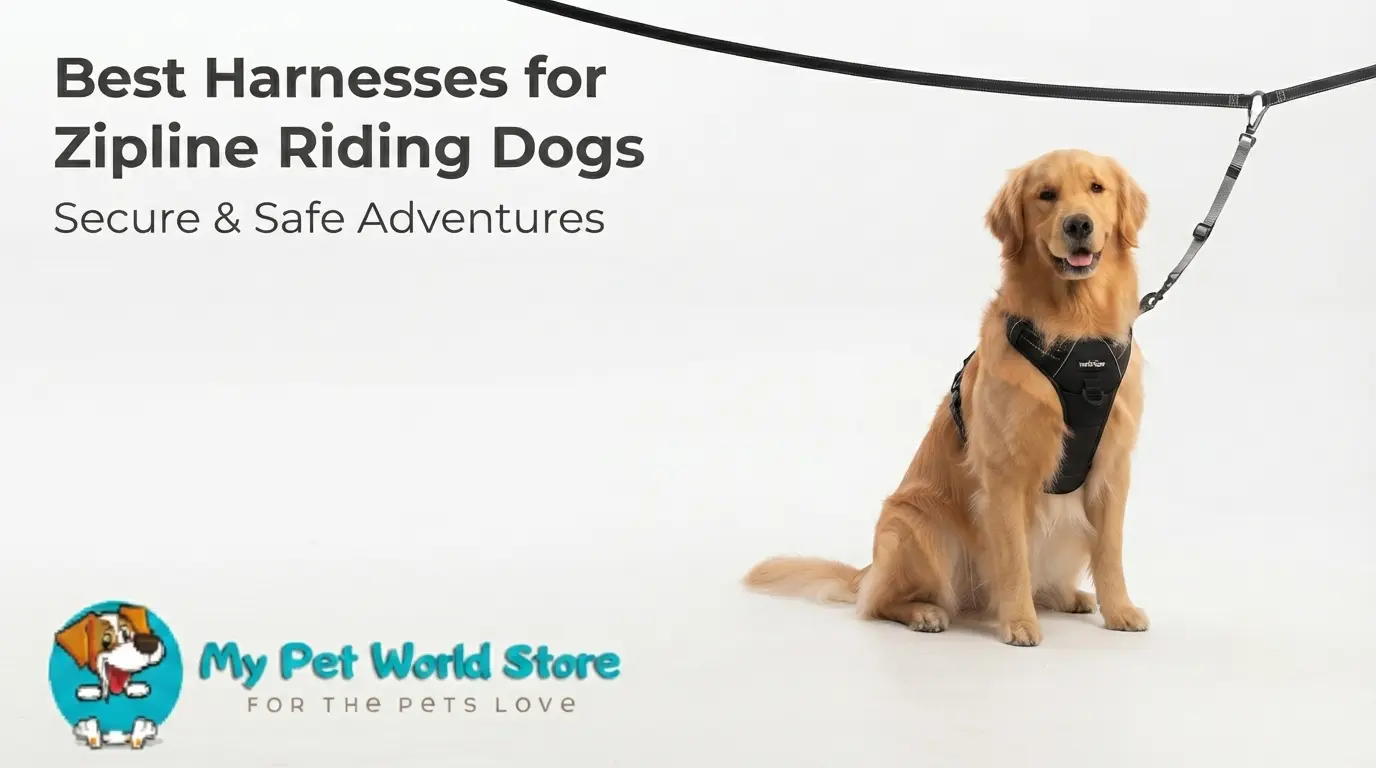
The best harness for zipline riding dogs use is the Ruffwear Front Range. It has four adjustment points that create a genuinely stable fit under lateral load, a reinforced back D-ring positioned between the shoulder blades rather than near the neck, and padded chest and belly panels that distribute force evenly during sudden stops or direction changes.
We compared harnesses across back D-ring strength, body fit stability, and construction quality to find five that genuinely hold up to zipline use rather than just walking. If you are also putting together a full outdoor setup, a properly fitted best rated dog harness is the single most important piece of equipment to get right before attaching your dog to any zipline system.
Quick Comparison
| Product | Best For | Key Feature | Link |
|---|---|---|---|
| Ruffwear Front Range Dog Harness | Best overall | Four adjustment points, padded chest and belly panels | Check Price |
| Julius K9 IDC Powerharness | Best heavy duty | Military grade buckles, top handle, reflective trim | Check Price |
| Kurgo Tru-Fit Smart Dog Walking Harness | Best budget pick | Steel nesting buckles, crash tested, five adjustment points | Check Price |
| Rabbitgoo No Pull Dog Harness | Best for medium dogs | Dual clip design, reflective strips, breathable mesh | Check Price |
Our Top Picks
1. Ruffwear Front Range Dog Harness
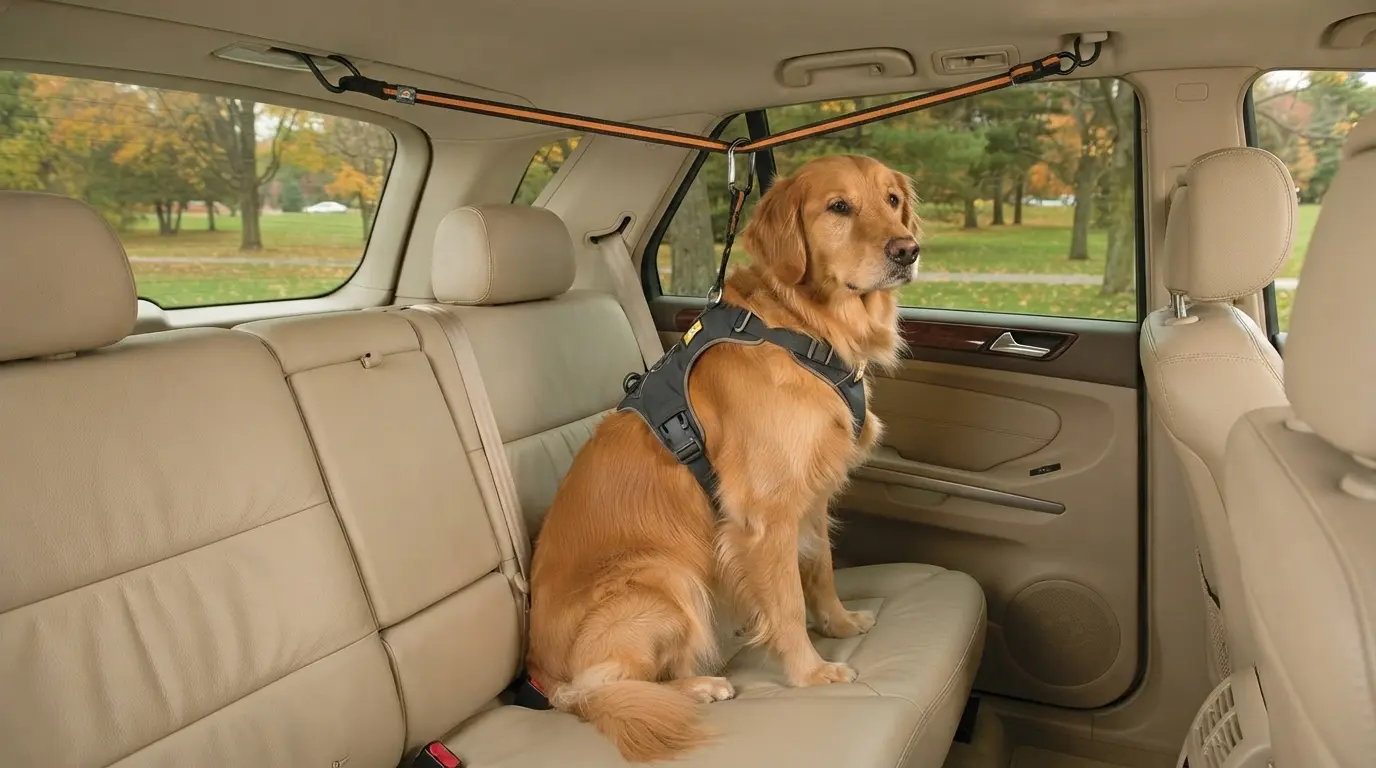
The Ruffwear Front Range is one of the most widely recommended harnesses for active dogs, and its reinforced back clip is exactly what you want attached to a zipline carabiner. We found the four-point adjustment system gives a genuinely snug fit that does not shift even when a dog lunges or changes direction suddenly. The padded chest and belly panels keep the load distributed evenly rather than pinching at a single contact point.
★ Why We Picked ItFour points of adjustment and a reinforced back attachment point make it one of the most secure fits available for zipline use.
Pros
- Padded chest and belly panels distribute load evenly, reducing pressure during zipline runs.
Cons
- Sizing runs slightly small; measure your dog carefully before ordering.
2. Julius K9 IDC Powerharness
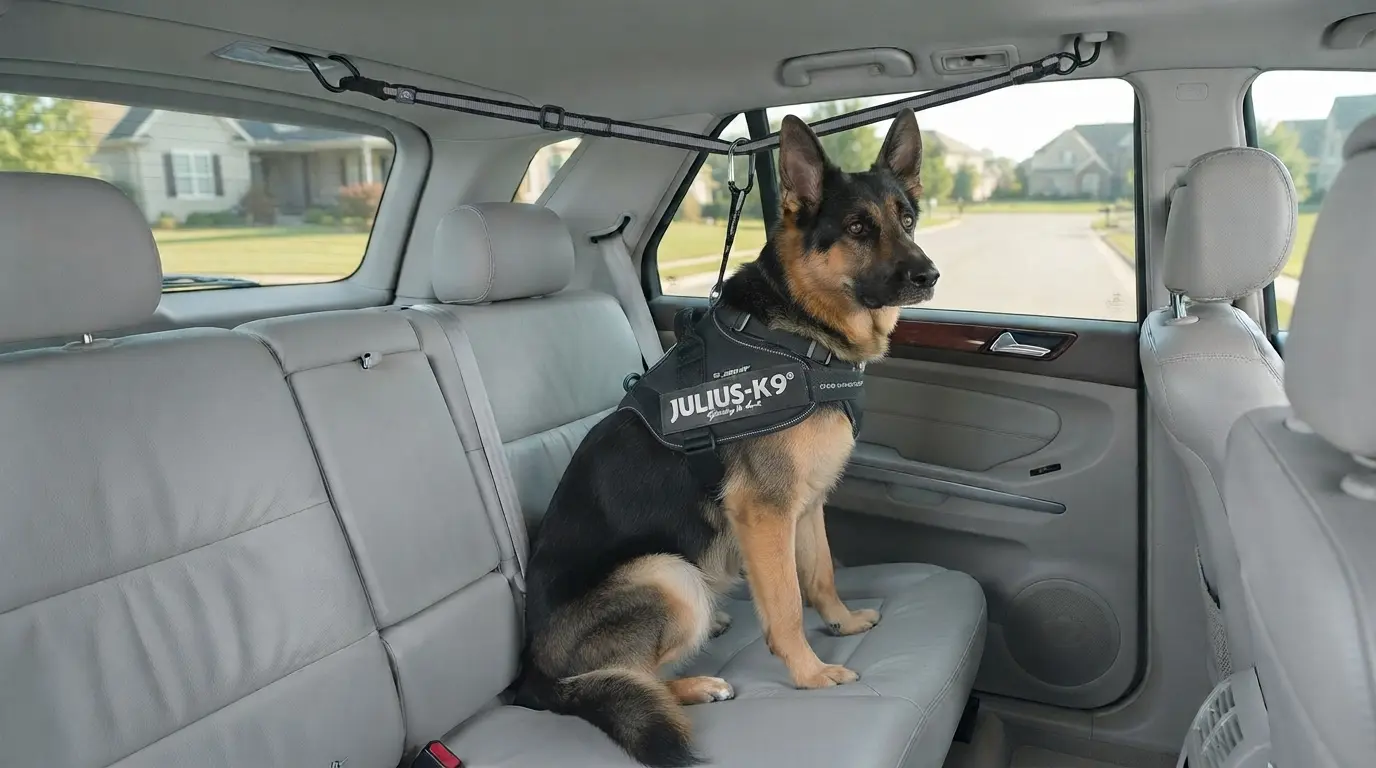
Julius K9 harnesses are used in working dog and search and rescue contexts, which tells you something about how they perform under real load. What stood out in our review is the reinforced D-ring on the back panel, which is rated well beyond what recreational zipline tension would put through it. The military grade buckle system stays locked under pressure in a way that standard plastic side-release buckles simply cannot match.
★ Why We Picked ItRobust construction with military grade buckles and a reinforced D-ring rated for working dog loads.
Pros
- Top handle lets you assist or reposition the dog quickly during outdoor activities.
Cons
- Heavier than most harnesses; not ideal for small or lightweight dogs.
3. Kurgo Tru-Fit Smart Dog Walking Harness
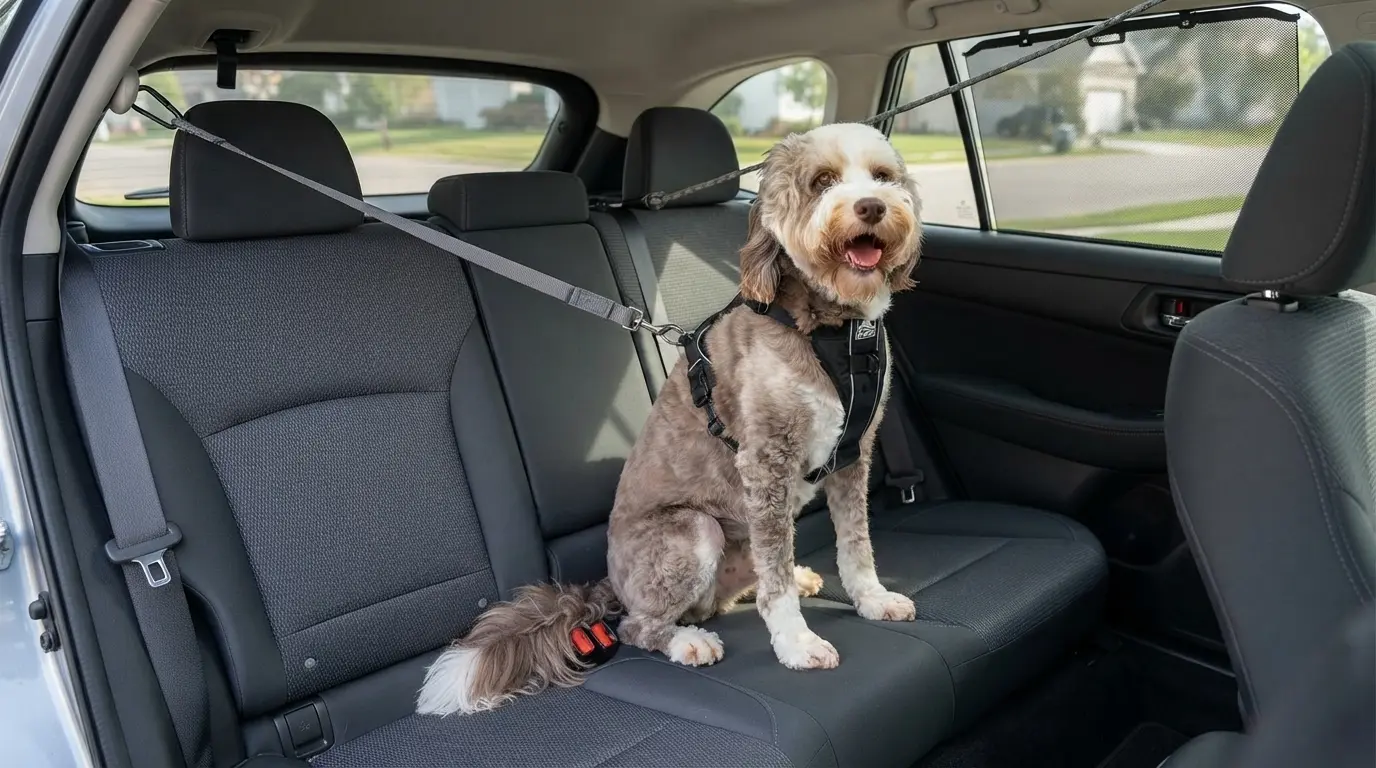
The Kurgo Tru-Fit earns its place on this list because of its steel nesting buckles, which hold far better under lateral stress than the plastic equivalents found on most budget harnesses. It was originally designed with vehicle crash testing in mind, and that structural rigor carries over well to zipline use where sudden load changes are common. Dogs that also tend to pull hard on walks benefit from the no pull front clip, and pairing it with the best leash for dogs that pull gives you full control both on and off the zipline.
★ Why We Picked ItSteel nesting buckles and a crash tested frame give this budget option unexpectedly strong load credentials for zipline attachment.
Pros
- Five adjustment points deliver a precise fit across a wide range of body shapes.
Cons
- Padding is minimal compared to premium options; less comfortable for long sessions.
4. Rabbitgoo No Pull Dog Harness
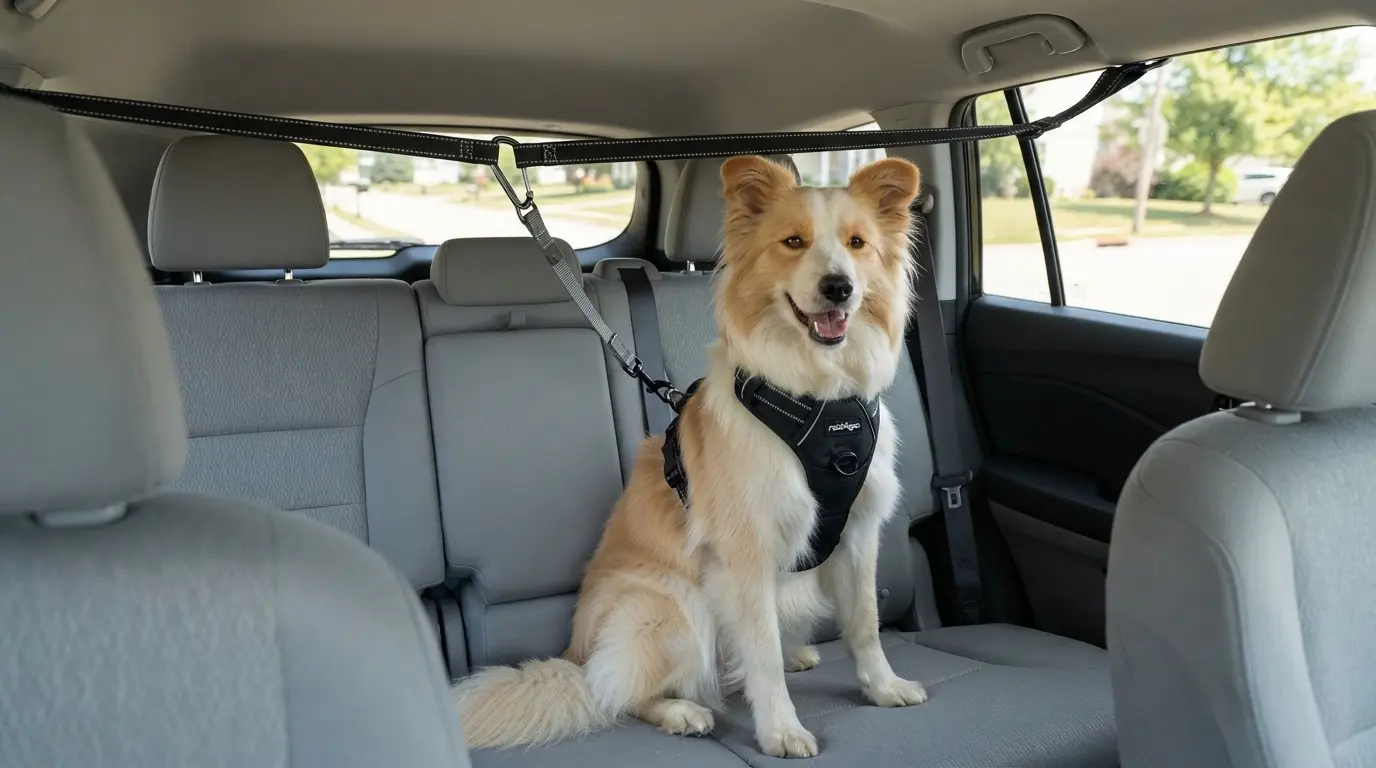
The Rabbitgoo harness has an unusually large review base for its price range, and the consistent praise around fit stability and the quality of its back D-ring is what drew our attention for zipline applications. We noticed the reflective strip layout covers the sides and chest, which is a practical feature for setups in wooded or low-light outdoor environments. The breathable mesh panels also make it a more comfortable choice for dogs that run hot during active outdoor activity.
★ Why We Picked ItDual front and back clip design with reflective strips makes it a versatile and visible choice for outdoor zipline setups.
Pros
- Breathable mesh construction keeps dogs cooler during active outdoor use.
Cons
- Back D-ring sits slightly forward on some builds; verify placement fits your zipline clip before relying on it.
Are Dog Ziplines Safe?
Dog ziplines are safe when the right harness is used, the line is properly tensioned, and the dog is introduced gradually rather than placed on it cold. The most common safety failures come from collar attachment instead of harness attachment, which creates dangerous neck load during any sudden stop or directional change. A back-clip harness with a reinforced D-ring, sized correctly for the dog, eliminates the primary risk and makes zipline use genuinely low-stress for most dogs once they are comfortable with the motion.
What Dog Harness Do Vets Recommend?
Vets most commonly recommend back-clip harnesses with padded chest panels for dogs in active outdoor use because they distribute force away from the trachea and cervical spine. For zipline-specific use, the priority shifts toward back D-ring load rating and buckle construction rather than walking comfort features alone. Owners setting up a broader outdoor routine for their dog will find that understanding the difference between dog harness vs collar clarifies exactly why harness attachment is non-negotiable for zipline systems.
What Should You Look for in a Harness for Zipline Use?
The three things that matter most are back D-ring strength, buckle material, and how stable the fit stays under lateral load rather than just forward pull. Padded contact points matter for comfort on longer sessions, and reflective trim becomes a practical safety feature in outdoor environments with variable light. Avoid harnesses where the back clip sits near the base of the neck rather than between the shoulder blades, as neck-adjacent attachment creates the same risks as collar use during zipline tension.
Buying Guide: Choosing the Best Harness for Dog Zipline Systems
Back D-ring placement and rating
The D-ring should sit between the shoulder blades, not near the neck. Check that it is reinforced with stitched webbing rather than just sewn onto the outer fabric.
Buckle material
Steel or nylon nesting buckles outlast plastic side-release buckles under repeated load. This is the single biggest quality gap between budget and premium harnesses.
Adjustment points
Four or five adjustment points give you a genuinely secure fit. Harnesses with only two points are designed for walking and will shift during zipline use.
Padding and fabric
Padded chest and belly panels distribute contact pressure during load events. Oxford fabric or reinforced nylon holds up to repeated outdoor use significantly better than standard polyester.
Reflective trim
Outdoor zipline setups are often in wooded or variable-light environments. Reflective trim on multiple panels rather than just the back adds meaningful visibility. Dogs being set up for regular outdoor adventures also tend to benefit from a dog rain coat when the harness setup is used in wet conditions.
Final Verdict
Best Overall: Ruffwear Front Range Dog Harness. Four adjustment points, reinforced D-ring, and padded load distribution in a proven outdoor design.
Best Heavy Duty: Julius K9 IDC Powerharness. Military grade buckles and a working-dog rated D-ring for larger and stronger breeds.
Best Budget: Kurgo Tru-Fit Smart Harness. Steel nesting buckles and crash tested construction at an accessible price.
Frequently Asked Questions
What is the best harness for zipline riding dogs?
The Ruffwear Front Range is the best overall harness for zipline use because of its four-point adjustment system, reinforced back D-ring, and padded load distribution. For heavy or working breeds, the Julius K9 IDC Powerharness is the stronger heavy duty option.
Are dog ziplines safe for all breeds?
Dog ziplines are safe for most breeds when the harness fits correctly and the line tension is set appropriately for the dog’s weight. Brachycephalic breeds with flat faces need extra monitoring due to their limited airway capacity during exertion.
What dog harness do vets recommend for outdoor use?
Vets generally recommend back-clip harnesses with padded chest panels for outdoor use. For zipline systems specifically, reinforced D-ring construction and stable multi-point adjustment are the features that matter beyond basic walking comfort.
What is the best zipline setup for dogs?
A cable zipline rated for at least double the dog’s weight, combined with a swivel clip that prevents line twist and a correctly fitted back-clip harness, forms the safest recreational setup. Always introduce the dog to the zipline gradually before running it at full extension.