
No products in the cart.

Why Is My Cat Suddenly Peeing on My Bed? Causes, Signs, and How to Stop It
by Julianne Thorne
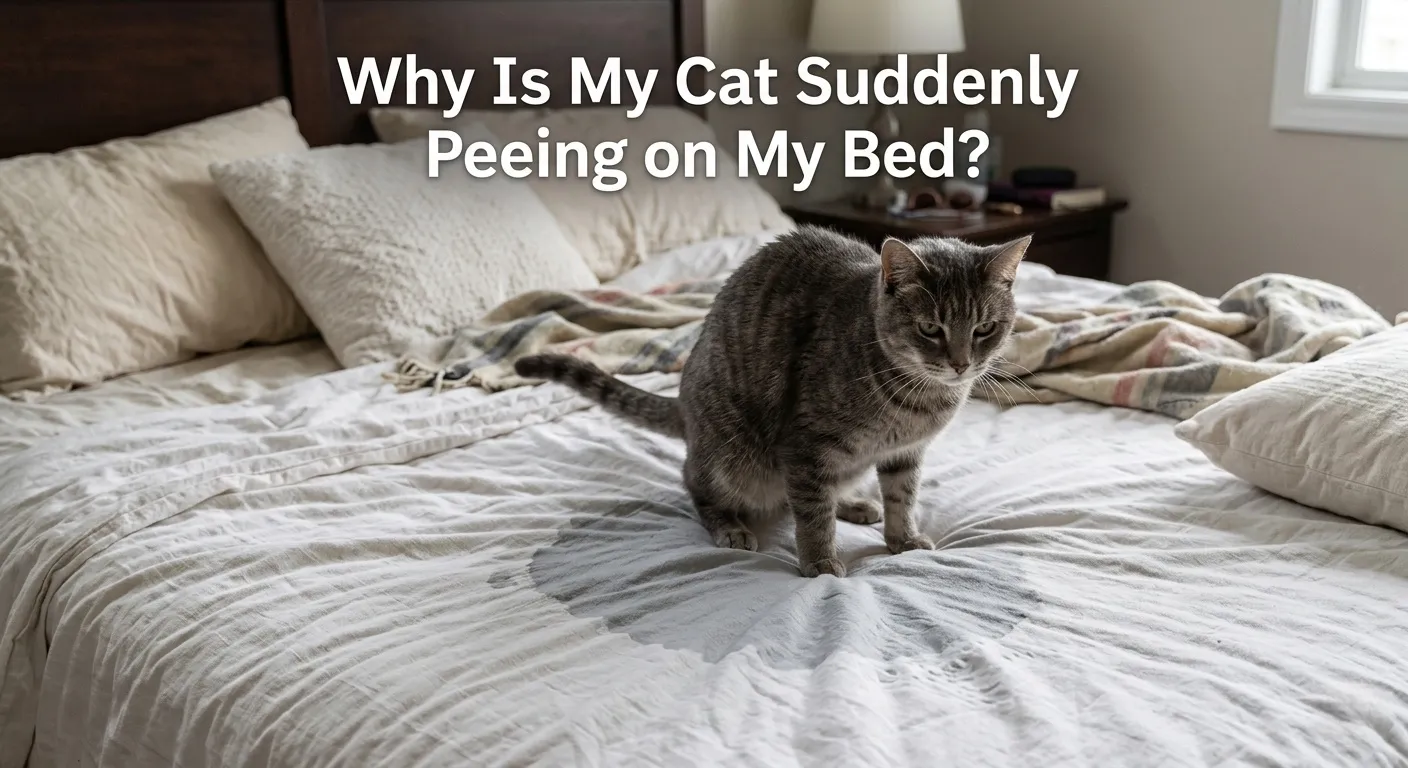
If your cat is peeing on your bed, it is almost always a sign of a medical issue, litter box problem, stress, or territorial marking. The most common cause is a urinary tract infection (UTI) or other health problem. See a vet first, then address environmental factors. With the right steps, this behavior can be stopped.
Waking up to find your cat has urinated on your bed is frustrating, but it is rarely done out of spite. Cats communicate discomfort and anxiety through their behavior. Understanding the root cause is the only way to fix it for good.
Key Takeaways
- Always rule out medical causes first with a vet visit
- Use an enzyme cleaner to fully eliminate urine odor from the bed
- A dirty, small, or poorly placed litter box is one of the most common fixable triggers
- Stress from changes in routine or household dynamics plays a major role
- Never punish your cat. It increases anxiety and worsens the behavior
- Neutering significantly reduces territorial spraying in most cats
- Most cases are fully resolved once the root cause is identified and treated
Top Reasons Your Cat Is Peeing on Your Bed
Medical Issues
UTIs, kidney disease, diabetes, bladder stones, and hyperthyroidism all cause sudden litter box avoidance.
Stress or Anxiety
New pets, moving, schedule changes, or loud environments trigger stress-related urination.
Litter Box Problems
Dirty boxes, wrong litter type, poor location, or too few boxes push cats to find alternatives.
Territorial Marking
Unneutered cats and multi-cat households are most prone to scent marking on soft surfaces.
Age-Related Changes
Senior cats can develop cognitive decline or arthritis, making it hard to reach the litter box in time.
Emotional Bonding
Your scent on the bed is comforting. A stressed cat may urinate there because it feels safest.
Important: If this is sudden and new behavior, schedule a vet visit immediately. Medical causes must always be ruled out before assuming it is behavioral.
Medical Causes: When to See a Vet Right Away
Sudden changes in litter box behavior are one of the earliest signs of illness in cats. Do not wait and see if it resolves on its own.
Common Medical Conditions That Cause Bed Urination
| Condition | Signs to Look For | Action Needed |
|---|---|---|
| Urinary Tract Infection (UTI) | Straining, frequent small urinations, blood in urine | Vet visit, antibiotics |
| Feline Idiopathic Cystitis (FIC) | Crying while urinating, licking genitals excessively | Stress reduction, vet care |
| Kidney Disease | Increased thirst, weight loss, lethargy | Bloodwork, dietary changes |
| Diabetes | Excessive drinking and urination | Insulin management |
| Bladder Stones | Blood in urine, painful posture | X-ray, possible surgery |
| Arthritis (seniors) | Reluctance to climb into litter box | Low-entry litter box, pain management |
A urine analysis and physical exam can identify most of these issues quickly. Early treatment leads to faster resolution.
Why Your Cat Is Choosing Your Bed Specifically
The bed is not a random choice. Several factors make it appealing to a distressed cat:
- Your scent provides emotional comfort and security
- Soft bedding feels similar to natural outdoor surfaces cats instinctively use
- A stressed cat may urinate where they feel safest, especially at night
- The elevated position makes them feel protected while vulnerable
This is especially true when cats experience separation anxiety or disruption to their daily routine. It is not revenge. It is communication.
Litter Box Problems That Drive Cats Away
Even a perfectly healthy cat will avoid a litter box that does not meet their standards. Cats are more sensitive to litter box conditions than most owners realize.
Common Litter Box Issues
- Not cleaned often enough: Cats prefer a box scooped at least once daily. A dirty box is a dealbreaker for many cats.
- Wrong litter type: Highly scented litters, coarse textures, or sudden litter changes can cause rejection.
- Box is too small: The box should be 1.5 times the length of your cat.
- Too few boxes: The general rule is one box per cat plus one extra.
- Poor placement: Boxes near noisy appliances, in high-traffic areas, or next to food bowls are often avoided.
- Covered box discomfort: Some cats feel trapped inside covered boxes, particularly anxious cats.
Pro Tip: Try offering two boxes side by side with different litter types. Let your cat choose. This quickly reveals a texture preference you may not have known about.
Stress and Anxiety: A Hidden Trigger
Feline Idiopathic Cystitis (FIC), one of the most common urinary issues in cats, is directly linked to stress. Even minor routine changes can trigger it.
Common Stress Triggers in Cats
- New pet or baby in the home
- Moving to a new house or rearranging furniture
- Owner schedule changes (new job, travel)
- Loud construction or neighborhood noise
- Conflict between cats in a multi-cat household
- Visitors or houseguests
If stress is the cause, the bed urination typically starts within days of the triggering event. Addressing the source of stress is essential, not just the symptom.
Cat Marking Territory vs. Urinating: What Is the Difference?
These two behaviors look similar but have different causes and solutions.
| Marking (Spraying) | Inappropriate Urination |
|---|---|
| Small amount of urine on vertical surfaces | Full void on horizontal surfaces |
| Tail held high, quivering | Normal squatting posture |
| More common in unneutered males | Affects any cat, any age, any sex |
| Usually behavioral or social | Often medical first, then behavioral |
| Fix: neuter, reduce stressors, Feliway diffusers | Fix: vet check, litter box audit |
How to Stop Your Cat From Peeing on Your Bed
Follow these steps in order for the best results. Skipping the vet step will lead to repeated failures if a medical cause is present.
- Visit your vet. Get a full urinalysis and physical exam. Rule out UTIs, kidney disease, diabetes, and FIC before anything else.
- Deep clean the bed immediately. Use an enzyme-based cleaner specifically for pet urine. Regular detergent does not break down the uric acid crystals that attract cats back to the same spot.
- Audit your litter box setup. Scoop daily, wash the box weekly, add an extra box, and test an unscented litter if you use scented.
- Identify and reduce stress triggers. Use Feliway plug-in diffusers, maintain consistent schedules, and create safe hiding spots throughout the home.
- Temporarily block access to the bedroom. Keep the door closed until the behavior is fully resolved. Reintroduce access gradually once the root cause is addressed.
- Place a litter box closer to the bedroom. This is especially helpful for senior cats with mobility issues.
- Consider calming supplements or medication. For anxiety-driven cases, your vet may recommend short-term anti-anxiety medication or supplements like L-theanine or zylkene.
Do not punish your cat. Rubbing their nose in the urine, shouting, or physical punishment increases anxiety and makes the problem worse. It does not teach cats to use the litter box.
Frequently Asked Questions
Why is my cat suddenly peeing on my bed?
Sudden bed urination is most commonly caused by a medical issue like a UTI, bladder problem, or kidney condition. It can also be triggered by stress from a change in routine, a new pet, or litter box dissatisfaction. Schedule a vet visit as the first step.
How do I keep my cat from urinating on my bed?
Start by getting a vet check to rule out medical causes. Then audit your litter box setup (clean daily, add more boxes, test different litter), reduce stress triggers in the home, and temporarily keep the bedroom door closed until the behavior stops. Use enzyme cleaner to remove all odor traces.
Should I punish my cat for peeing on my bed?
No. Punishment does not work with cats and actively makes the problem worse by increasing their anxiety. Cats do not connect punishment after the fact to the behavior. Instead, focus on identifying and fixing the underlying cause.
What smell do cats hate to pee on?
Cats dislike citrus, white vinegar, lavender, and eucalyptus. Lightly spraying these on a surface (diluted, and only cat-safe options) can deter urination. Always use enzyme cleaner first to eliminate existing urine odor before applying deterrents.
Does vinegar stop cats from peeing?
White vinegar can act as a mild deterrent because cats dislike the acidic smell. However, it does not neutralize cat urine. Always clean with an enzyme cleaner first, allow it to fully dry, and then apply a diluted vinegar spray if desired. On its own, vinegar is not effective at stopping the behavior.
Leave a comment