
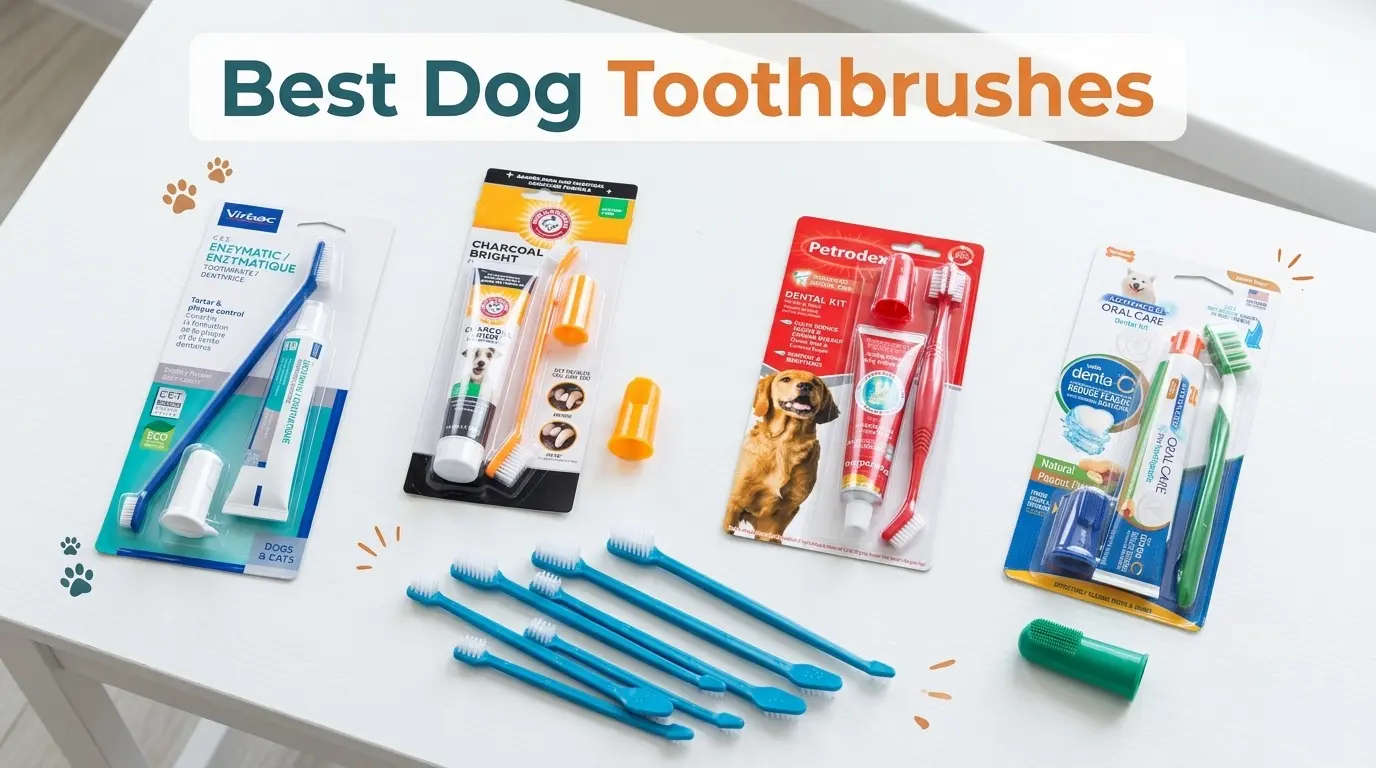
The best dog toothbrushes remove plaque and tartar buildup before it turns into gum disease, and picking the right one comes down to your dog’s size, temperament, and how comfortable they are with brushing. We researched the top-rated options available on Amazon, gathered input from experienced dog owners, and evaluated each brush on bristle quality, handle design, and real-world ease of use. Whether you are brushing a puppy for the first time or working with a stubborn adult dog, the picks below cover every situation.
Quick Comparison
| Product Name | Best For | Key Feature | Link |
|---|---|---|---|
| Virbac C.E.T. Pet Toothbrush | All dog sizes, vet recommended | Dual-ended, angled head | Check Price |
| Arm and Hammer Clinical Care Dental Kit | Beginners, budget buyers | Includes toothpaste and brush | Check Price |
| Boshel Dog Toothbrush Set | Small and medium dogs | Finger brush plus long handle | Check Price |
| Petrodex 360 Degree Dog Toothbrush | Dogs who resist brushing | Full-wrap bristle head | Check Price |
| Nylabone Advanced Oral Care Dog Toothbrush | Large breeds, deep clean | Angled head, soft nylon bristles | Check Price |
Product Reviews
Virbac C.E.T. Pet Toothbrush
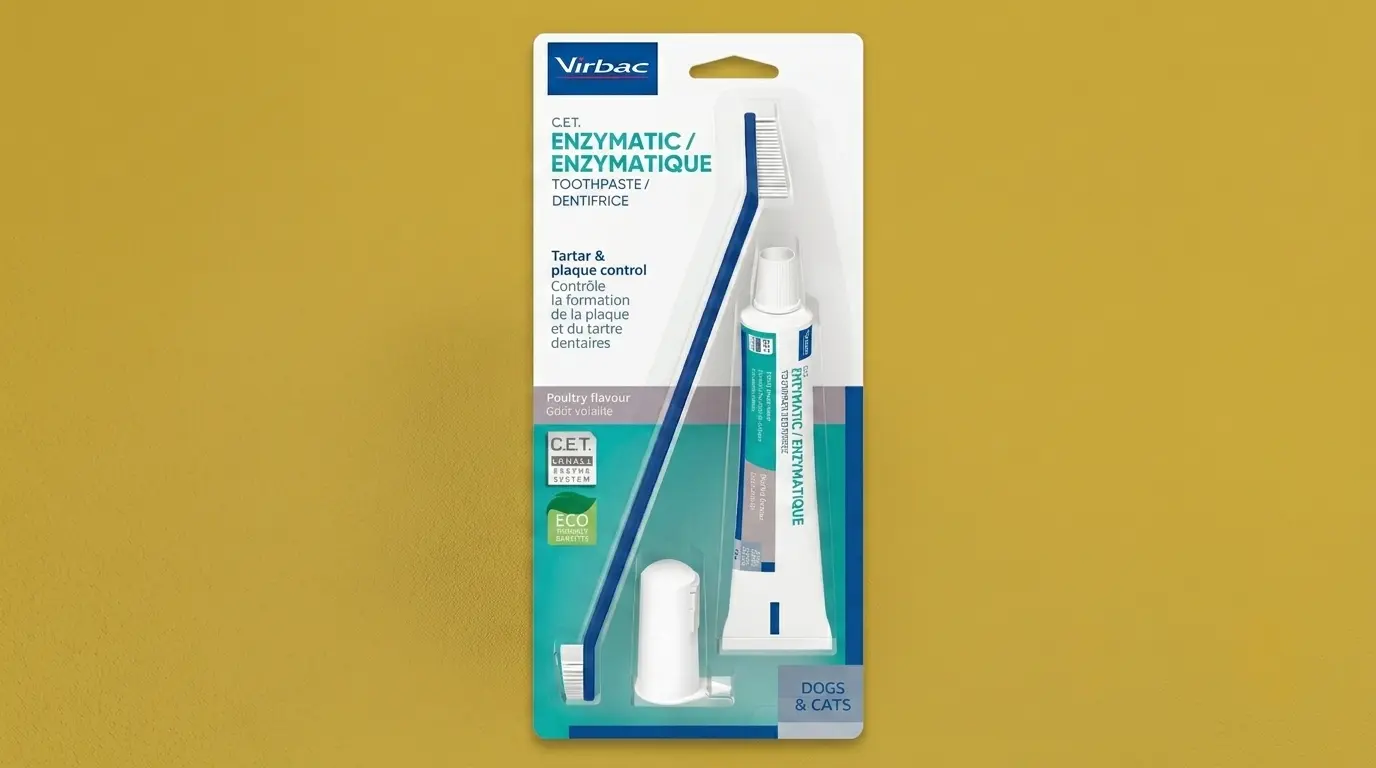
The Virbac C.E.T. is the toothbrush most vets reach for when recommending a canine toothbrush, and it earns that trust through a dual-ended design that covers large surface areas quickly on one end and lets you work into tight spaces on the other. The angled brush head matches the natural angle vets use to clean the gum line, which makes each session more effective in less time. It fits dogs of all sizes and holds up well through daily use without the bristles splaying quickly.
★ Why We Picked ItDual-ended design and vet-recommended angled head make it the most clinically effective option on the list.
Pros
- Trusted by vets and used in professional dental cleanings, with bristles that hold their shape through daily use.
Cons
- Sold as a brush only, so you will need to purchase dog-safe toothpaste separately.
Arm and Hammer Clinical Care Dental Kit
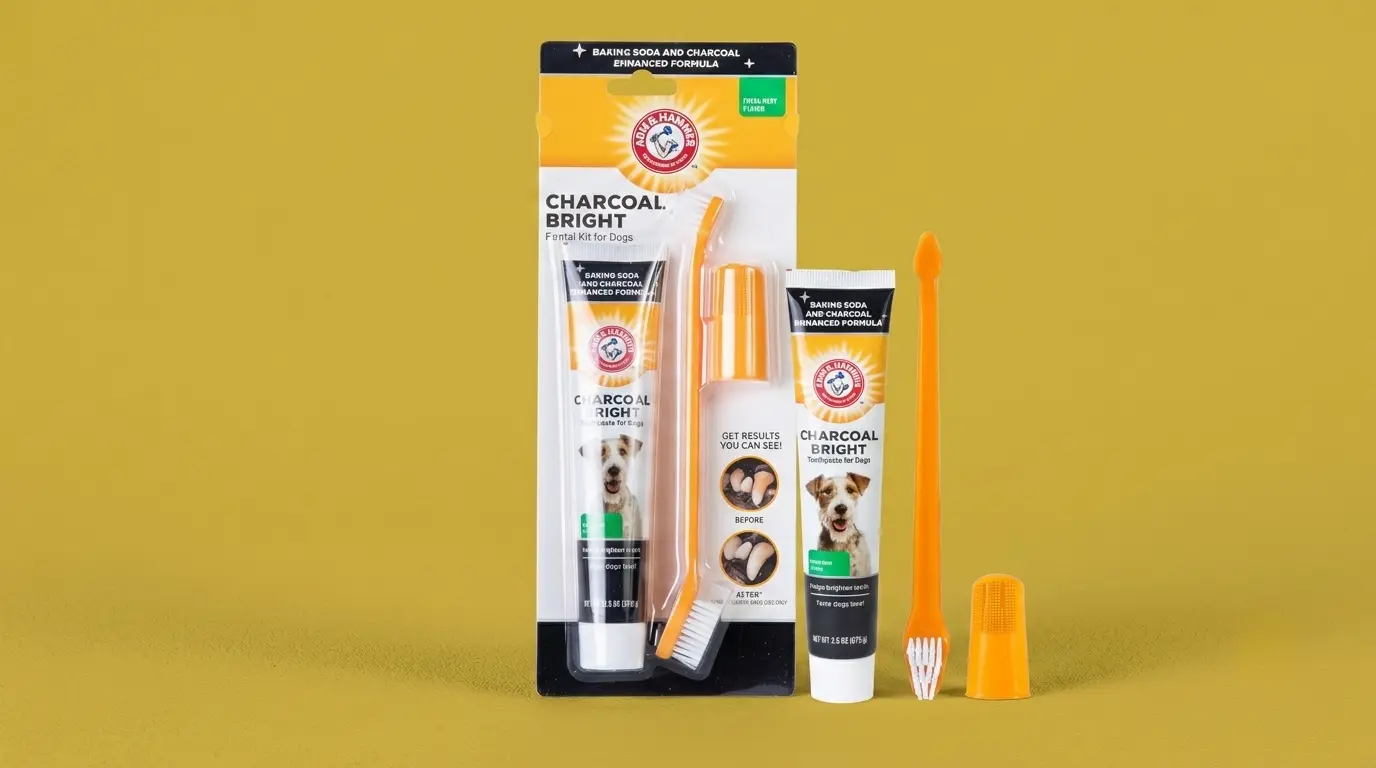
This kit bundles a long-handled toothbrush and a finger brush with Arm and Hammer baking soda toothpaste, which gives first-time dog owners everything they need without having to source items separately. The baking soda formula is gentle on enamel and genuinely helps neutralize odor, which makes it a popular pick for owners whose dogs have noticeably bad breath. The finger brush included in the kit is also useful for puppies who are not ready for a full-sized handle.
★ Why We Picked ItComplete starter kit with toothbrush, finger brush, and toothpaste at a budget-friendly price.
Pros
- Baking soda paste neutralizes bad breath effectively and is safe for dogs to swallow.
Cons
- The toothpaste flavor does not appeal to every dog, which can make early training sessions harder.
Boshel Dog Toothbrush Set
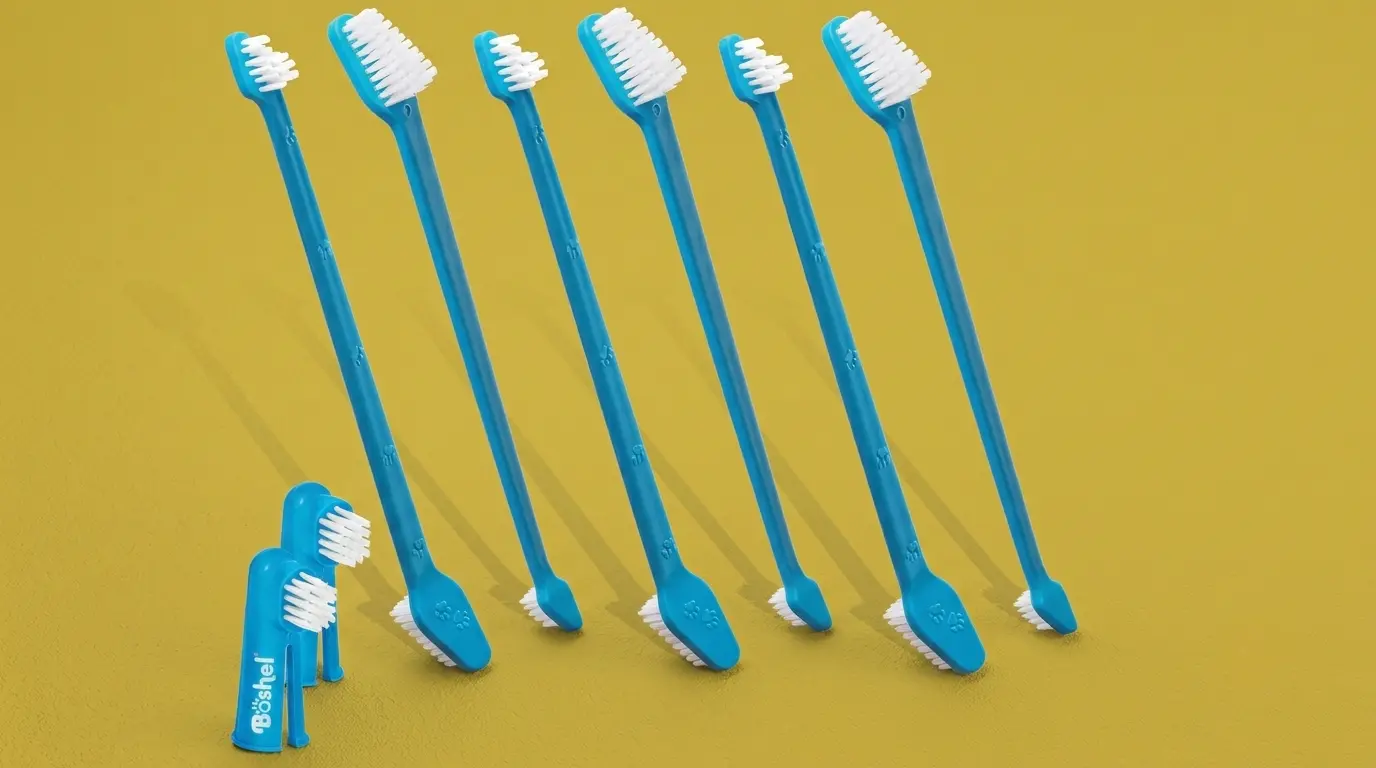
The Boshel set gives you a long-handled brush for back molars and a soft silicone finger brush for the front teeth and gums, which is the combination most recommended in our guide to brushing dog teeth for small and medium-sized dogs. The silicone finger sleeves are gentle enough for sensitive gums and work well during the initial training phase when dogs are still getting used to having their mouths touched. The set comes in a pack of multiple brushes, so there is plenty of backup without needing to reorder frequently.
★ Why We Picked ItTwo-tool system covering both rear molars and front gums, ideal for small to medium dog owners.
Pros
- Soft silicone finger brush is gentle enough for puppies and sensitive adult dogs.
Cons
- Finger brushes wear out faster than hard-handled options and need replacing every few weeks.
Petrodex 360 Degree Dog Toothbrush
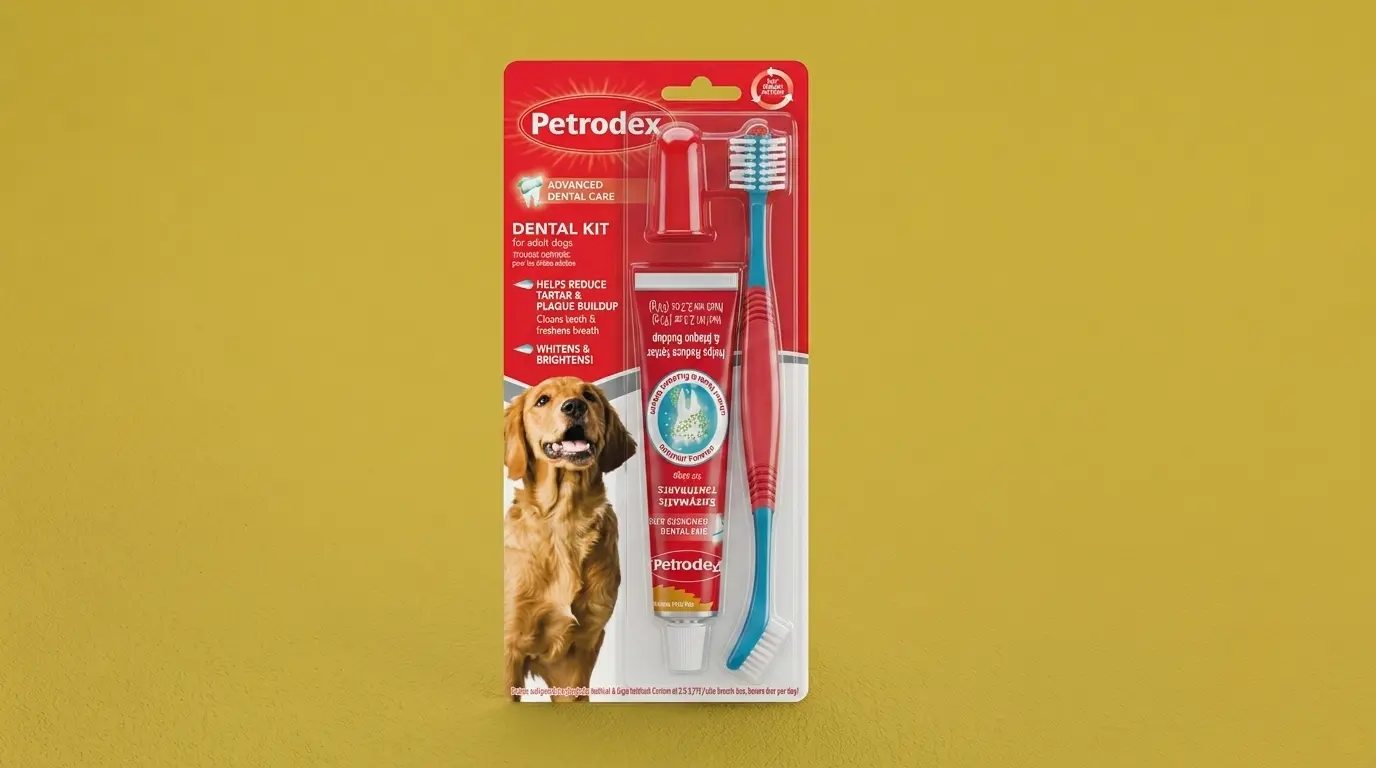
The Petrodex 360 wraps bristles all the way around the brush head so every surface of a tooth gets contact in a single pass, which is a genuine advantage for dogs who clamp down or resist a traditional back-and-forth motion. Owners with impatient dogs or those who have trouble keeping sessions short consistently rate this as their most-used brush because it reduces time spent per tooth. The handle is long enough to reach back molars on medium and large breeds without awkward hand positioning.
★ Why We Picked It360-degree bristle wrap cleans all tooth surfaces in one pass, perfect for dogs that resist standard brushing.
Pros
- Reduces brushing time significantly, which improves consistency for reluctant dogs.
Cons
- The full-wrap head can feel bulky inside smaller dog mouths, making it better suited to medium and large breeds.
Nylabone Advanced Oral Care Dog Toothbrush
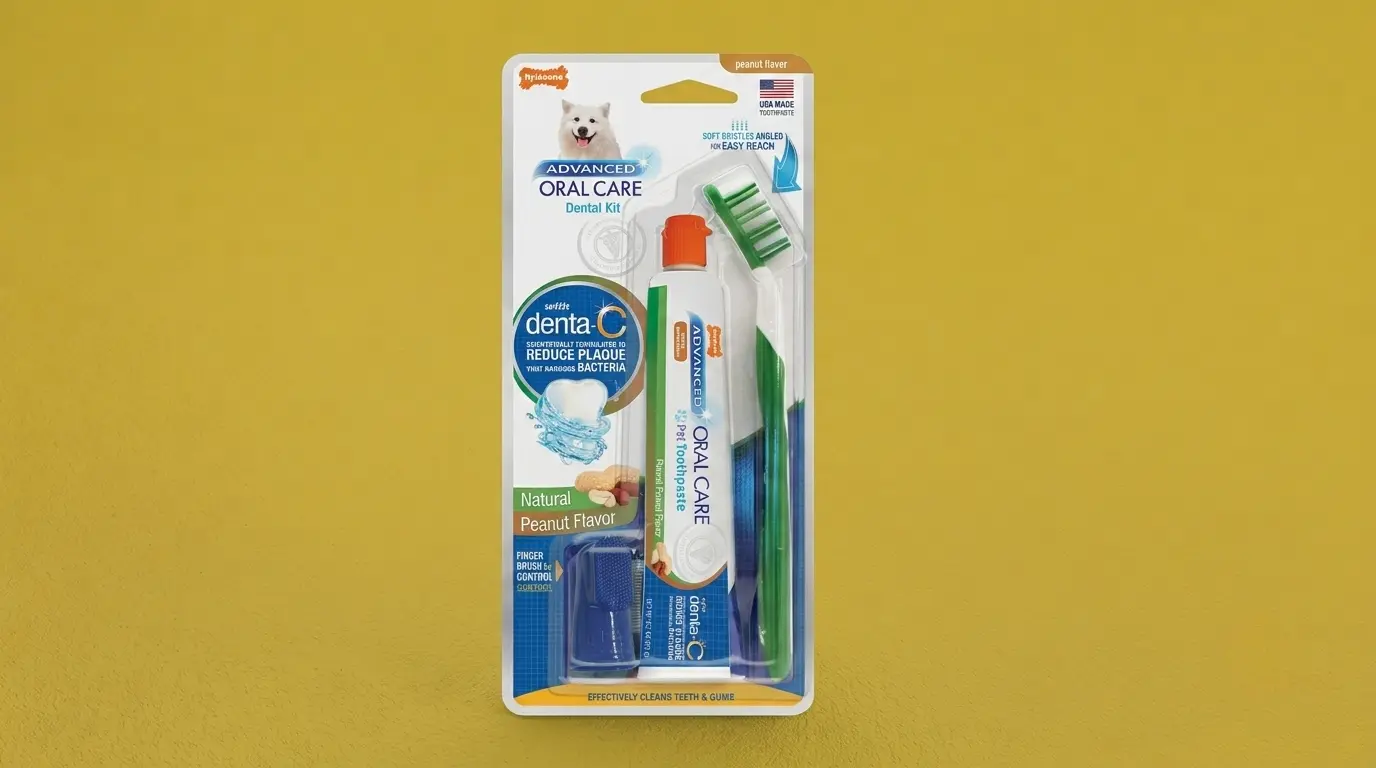
Nylabone’s angled toothbrush is designed specifically for large breeds, with a longer handle and a wider brush head that covers more surface area per stroke on big dogs. The soft nylon bristles are firm enough to dislodge plaque but gentle enough not to irritate gums, and the angled neck positions the bristles naturally against the gum line without requiring awkward wrist angles. It is a reliable everyday option for large-breed owners who brush consistently and want a purpose-built tool rather than an all-sizes compromise.
★ Why We Picked ItPurpose-built for large breeds with a longer handle and wider head that matches bigger jaw sizes.
Pros
- Angled neck naturally aligns bristles to the gum line, reducing technique-related errors.
Cons
- Head size is too large for small breeds and may cause discomfort if used on dogs under 30 pounds.
What Do Vets Recommend for Brushing Dogs Teeth?
Vets consistently recommend brushing a dog’s teeth with a soft-bristle brush and dog-safe fluoride-free toothpaste at least three times per week, with daily brushing being the gold standard for preventing periodontal disease. The angle of the brush matters as much as frequency: bristles should contact the gum line at a 45-degree angle to break up plaque before it hardens into tartar. If you are new to the routine, our step-by-step guide to brushing dog teeth explains the technique in detail and covers how to build a habit your dog will accept.
What Is the Difference Between a Finger Toothbrush and a Standard Dog Toothbrush?
A finger toothbrush slides over your fingertip and lets you feel exactly how much pressure you are applying, which makes it ideal for puppies and dogs in the early stages of training. A standard handled toothbrush gives more reach and leverage, which is necessary for cleaning back molars on medium and large breeds. Most experienced dog owners start with a finger brush during the first few weeks, then transition to a handled brush once the dog is comfortable with the sensation.
How Many Times a Week Should You Brush Your Dog Teeth?
Daily brushing is the most effective approach for preventing plaque buildup and gum disease, but brushing three times a week is the minimum vets consider meaningful for dental health maintenance. Less frequent brushing still removes some surface debris but does not interrupt the plaque-to-tartar cycle reliably. Consistency matters more than perfection: three solid sessions per week produce better results than infrequent thorough cleanings.
Buying Guide: How to Choose the Right Dog Toothbrush
Brush size and dog size: Match the brush head to your dog’s jaw. A large breed brush in a small dog’s mouth causes discomfort and inconsistent contact. Most manufacturers specify size ranges on packaging.
Bristle type: Soft bristles are the right choice for most dogs. Medium or firm bristles can irritate gums, especially in dogs with existing sensitivity or early gum inflammation.
Handle design: Long handles with angled necks give better reach into back molars without requiring uncomfortable hand positioning. Dual-ended brushes like the Virbac C.E.T. offer both precision and coverage in one tool.
Finger brush vs handled brush: Finger brushes work best for puppies and dogs new to brushing. Handled brushes are more effective for regular adult-dog maintenance, particularly for larger breeds.
Toothpaste compatibility: Always use dog-safe, fluoride-free toothpaste. Human toothpaste contains xylitol and fluoride which are toxic to dogs. If you are also shopping for dental treats to supplement brushing, our best slow feeder dog bowl guide touches on how feeding pace connects to overall oral health.
Ease of cleaning the brush: Look for brushes with removable heads or open bristle designs that rinse clean easily. A brush that traps food and bacteria between sessions defeats part of its purpose.
Final Verdict
Best Overall: Virbac C.E.T. Pet Toothbrush. Vet-recommended, dual-ended, and built for all dog sizes. It is the safest recommendation for anyone who wants professional-grade results at home.
Best Budget Option: Arm and Hammer Clinical Care Dental Kit. Everything a first-time owner needs in one box at an accessible price.
Best for Dogs That Resist Brushing: Petrodex 360 Degree Dog Toothbrush. Full-wrap bristles clean all surfaces faster, which keeps short-tempered dogs calmer during sessions.
Best for Large Breeds: Nylabone Advanced Oral Care Dog Toothbrush. Purpose-built handle length and head size for dogs over 30 pounds.
Best for Beginners and Puppies: Boshel Dog Toothbrush Set. The included finger brush makes early training gentler and more approachable for both dog and owner.
Frequently Asked Questions
What is the most effective dog toothbrush?
The Virbac C.E.T. Pet Toothbrush is consistently rated the most effective option by vets because its angled dual-ended design targets the gum line where plaque starts. For dogs who resist brushing, the Petrodex 360 Degree brush covers all tooth surfaces faster, which improves compliance.
What toothbrushes do dog groomers use?
Most professional groomers use long-handled angled toothbrushes with soft bristles, similar to the Virbac C.E.T. or Nylabone Advanced Oral Care designs. Finger brushes are used for puppies or dogs being introduced to brushing for the first time during a grooming session.
Can I use a human toothbrush on my dog?
A soft-bristled human toothbrush can work in a pinch, but purpose-built dog toothbrushes have angled heads and handle lengths designed specifically for canine jaw anatomy. Human brushes are also harder to maneuver into back molars comfortably, which reduces how effective each session is.
What dissolves plaque on a dog’s teeth?
Regular mechanical brushing is the only reliable way to remove plaque before it mineralizes into tartar. Dog-safe enzymatic toothpastes help break down plaque chemically between sessions. Dental chews and water additives offer supplemental support but do not replace brushing. For dogs who are already dealing with tartar buildup, a professional cleaning guide explains when a vet cleaning is necessary versus what home care can manage.