
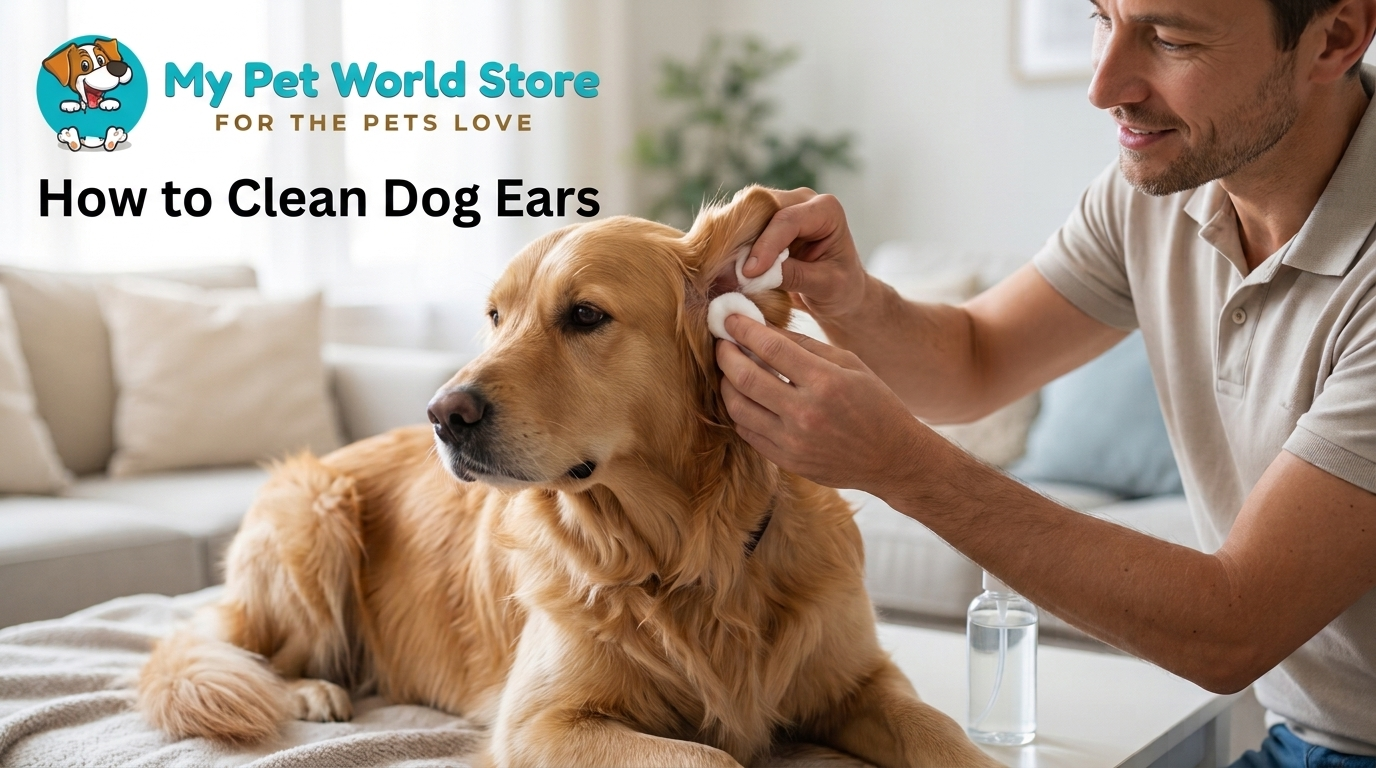
To clean a dog’s ears, fill the ear canal with a veterinarian approved dog ear cleaner, massage the base of the ear for 20 to 30 seconds, let your dog shake its head, then wipe the visible part of the ear with a cotton ball or gauze. Never push anything into the canal and skip cotton swabs completely. Most healthy dogs need this about once a month, while floppy eared and swimming dogs may need it every one to two weeks.
What your dog wants you to know is simple: gentle and predictable feels safe, but poking and rushing feels painful. Most dogs do not resist ear cleaning because they dislike you. They resist because the ear is sensitive, the cleaner feels cold and wet, or the last session turned into a wrestling match. A few small changes in technique make the whole job quicker and calmer. If you are building a care routine for a new pet, ear cleaning belongs on the list of everything a new dog owner needs to keep their ears, coat, and teeth healthy.
Why Knowing How to Clean Dog Ears Matters
A dog’s ear canal is not a straight tube like ours. It drops down vertically and then turns sharply inward, which makes it easy for wax, dirt, and moisture to get trapped. Warm, damp, and dark is exactly the environment where bacteria and yeast thrive, and that is why ear infections are one of the most common reasons dogs visit the vet.
The most common mistakes owners make include pushing cotton swabs deep into the canal, cleaning too often until the skin becomes irritated, using hydrogen peroxide or rubbing alcohol, and ignoring a bad smell for weeks. Done correctly, a short and gentle routine keeps ears comfortable and helps you spot problems early, before they turn into painful infections.
What You Need Before You Start
Gather everything before you bring your dog over. A dog that has to wait while you search the cupboards will lose patience fast.
- A veterinarian approved dog ear cleaner: choose one made for dogs, and ask your vet if your dog has a history of ear problems.
- Cotton balls or gauze squares: soft and disposable, used only on the parts of the ear you can see.
- A towel: for your lap, your dog’s shoulders, and the head shaking that follows.
- Small, soft treats: to reward calm behavior at each step.
- Disposable gloves (optional): helpful if your dog’s ears are waxy or you want to keep your hands clean.
Keep these supplies together with your other dog grooming tools so the routine is easy to repeat.
How to Clean Dog Ears Step by Step
Rushing is the single biggest cause of head shaking and dodging. A dog that has a moment to see the bottle and sniff it is far less likely to panic than one that gets grabbed without warning. Follow these steps for each ear:
Step 1: Pick a calm spot
Choose a quiet place with a surface that is easy to wipe, such as a bathroom floor or a mat on the kitchen floor. Ask your dog to sit or lie down and give a treat before you touch anything.
Step 2: Check the ear first
Lift the ear flap and look inside. Healthy ears are pale pink, mostly clean, and have only a faint smell. If you see redness, swelling, thick discharge, or your dog pulls away in pain, stop and call your vet instead of cleaning.
Step 3: Lift the flap and fill the canal
Hold the ear flap straight up to open the canal. Squeeze enough cleaner into the ear to fill the canal. Do not let the tip of the bottle touch the ear, because that can carry bacteria back into the bottle.
Step 4: Massage the base of the ear
With the flap still held up, massage the base of the ear, which is the firm cartilage below the opening, for 20 to 30 seconds. You should hear a soft squishing sound. This loosens wax and debris so it can come out.
Step 5: Let your dog shake
Release the ear and step back. Your dog will shake its head, which flings the loosened debris and extra cleaner out of the canal. Keep the towel ready, because this part is messy.
Step 6: Wipe the outer ear
Wrap a cotton ball or gauze around your finger and gently wipe the inside of the ear flap and the visible folds near the entrance. Only clean what you can see. Repeat with a fresh cotton ball until it comes away mostly clean, then reward your dog and move on to the other ear.
Where to Position Your Dog While Cleaning
Think of it like trimming a toddler’s fingernails. The calmer and more supported the position, the smaller the chance of a sudden jerk. For small dogs, a lap or a steady table with a non slip mat gives them a secure base. For medium and large dogs, having them sit or lie down against your leg works well, with one hand holding the ear flap and the other holding the bottle.
If your dog is strong or nervous, ask a second person to help. One person can steady the head and offer treats while the other handles the cleaner. A secure, relaxed position reduces head movement and makes everything faster.
What to Avoid When Cleaning Dog Ears
Many owners think more scrubbing means cleaner ears. In reality, over cleaning and deep poking are what usually cause the damage. If your dog is struggling hard, the right response is to stop and try again later, not to hold tighter.
| What to Avoid | Why It Causes Problems | What to Do Instead |
|---|---|---|
| Cotton swabs | They push wax deeper and can injure the canal or eardrum | Use cotton balls or gauze on the visible ear only |
| Hydrogen peroxide or rubbing alcohol | Both can sting and irritate sensitive skin and leave the ear damp | Use a cleaner made for dogs |
| Homemade mixtures and vinegar | They can burn inflamed skin and do not suit every dog | Ask your vet which cleaner is right for your dog |
| Cleaning too often | Constant cleaning strips natural oils and irritates the skin | Clean only as often as your dog needs |
| Cleaning a painful or bleeding ear | It can hurt your dog and hide signs your vet needs to see | Stop and book a vet visit |
| Forcing a struggling dog | It builds fear and makes every future session harder | Pause, reward calm moments, and try again later |
How Often Should You Clean Dog Ears
There is no single schedule that suits every dog. The best rule is simple: if the ears look clean and have no smell, leave them alone. Use the table below as a starting point and adjust based on what you see and what your vet advises.
| Type of Dog | Typical Cleaning Schedule |
|---|---|
| Healthy dogs with upright ears | About once a month, or only when you see dirt or wax |
| Floppy eared breeds such as Cocker Spaniels and Basset Hounds | Every one to two weeks, since folded ears trap moisture |
| Dogs that swim often | After each swim, and also after baths |
| Dogs with allergies or past ear infections | As directed by your vet |
Signs of an Ear Infection: When to Stop and Call Your Vet
Routine cleaning is for healthy ears. If you notice any of the signs below, cleaning at home is not enough, and washing the ear before an appointment can even hide what your vet needs to see.
- A strong, musty, or sour smell coming from the ear
- Redness, swelling, or heat inside the ear flap
- Yellow, green, brown, or black discharge, especially if it looks like coffee grounds
- Frequent head shaking, ear scratching, or rubbing the ears on the floor
- Crusty skin, hair loss, or sores around the ear
- Crying when you touch the ear, or a head tilt and loss of balance
Ear scratching is sometimes linked to allergies. If your dog also itches elsewhere on the body, a gentle shampoo for dogs with itchy skin can help soothe the skin while your vet checks for the underlying cause. It is also a good habit to ask your vet to look in the ears during wellness visits, such as when your dog is due for rabies shots and other routine care.
Every dog is different, and your veterinarian is the best person to decide how your dog’s ears should be cared for, especially if your dog has a long history of ear trouble.
How to Clean the Ears of a Dog Who Hates It
Start by teaching your dog that ear handling predicts good things. Gently touch and lift the ear flap for a second, then give a treat. Build up to holding the flap for a few seconds, then to showing the bottle, and finally to a short cleaning with a treat after every step. Warm the bottle in your hands for a minute first, because cold liquid in the ear is a common reason dogs flinch.
Keep sessions short and always end on a calm note. The same patience you use when you brush your dog’s teeth works here: small steps, no forcing, and plenty of rewards. Some dogs will always dislike ear cleaning, and that is normal. If your dog is too painful or too anxious to handle at home, a vet or professional groomer can do it safely for you.
Ear Care During Bathing and Grooming
Water that stays in the ear canal is one of the biggest triggers for infections, especially in floppy eared dogs. When giving your dog a bath, keep water and shampoo away from the ears, wash the head last with a damp cloth, and dry the ears gently with a towel afterward. If your vet or groomer advises it, you can place a cotton ball loosely at the ear opening during the bath, and remove it as soon as you finish. Never push it down into the canal.
Dogs with very hairy ear canals, such as Poodles and Schnauzers, may need hair removal from time to time. Leave this to a groomer or vet, since pulling hair at home can irritate the skin.
Common Myths About Cleaning Dog Ears
| Myth | Fact |
|---|---|
| Dogs need their ears cleaned every week | Many healthy dogs only need it about once a month. Too much cleaning can irritate the skin. |
| Cotton swabs are the best tool | Swabs push debris deeper and can injure the canal. Cotton balls or gauze on the visible ear are safer. |
| Dark wax always means an infection | A little wax is normal. Heavy dark discharge with odor or scratching is when you should see a vet. |
| Home remedies work as well as a proper cleaner | Homemade mixtures can sting and may not suit your dog’s skin. A cleaner made for dogs is the safer choice. |
| A smelly ear just needs a deeper clean | A bad smell usually signals an infection that needs a vet exam and treatment, not more scrubbing. |
Frequently Asked Questions
Can I use a cotton swab to clean my dog’s ears?
No. Cotton swabs can push wax deeper into the canal and may injure the ear or the eardrum. Use a cotton ball or gauze wrapped around your finger and wipe only the parts you can see.
What is the black stuff in my dog’s ears?
A small amount of dark wax can be normal. A lot of black or coffee ground like debris, especially with scratching or odor, can point to ear mites or a yeast or bacterial infection, so it is best to have your vet take a look.
Can I clean my dog’s ears with water?
Plain water is not recommended, because it can stay in the canal and create the damp conditions where infections grow. A dog ear cleaner is made to loosen wax and evaporate cleanly.
How do I clean a dog’s ears that are infected?
Do not try to treat an infection at home. Your vet needs to examine the ear, identify the cause, and prescribe the right medication. They will also show you how to clean the ear during treatment.
Is it okay to clean a puppy’s ears?
Yes, as long as you are gentle. Use a cleaner suitable for puppies, check with your vet first if you are unsure, and keep sessions very short. Starting early with treats and calm handling makes ear care easier for life.