
Making a cat bed at home is easier than most people expect. Whether you have old blankets lying around or a spare cardboard box, you can create a comfortable sleeping spot your cat will genuinely enjoy. DIY cat beds let you control the size, material, and washability, which store bought options do not always allow. This guide walks you through multiple methods so you can pick the one that fits your time, budget, and what you have on hand.
Cats are notoriously picky about where they sleep. If you want to skip the DIY route entirely, our guide to the best cat beds covers the top tested options available to buy. Otherwise, read on for everything you need to build one yourself.
What Cats Actually Look for in a Sleeping Spot
Before you start cutting or sewing, it helps to understand what makes a bed appealing to a cat. Cats prefer spots that feel enclosed, warm, and safe. An open flat bed placed in the middle of a room is less likely to be used than a slightly raised or walled option in a quieter corner.
Key comfort factors cats prefer:
- Soft, warm material that holds body heat
- Sides or walls that create a sense of enclosure
- A location away from high traffic or loud areas
- A surface that carries a familiar scent
- Raised positions when possible, since cats feel safer elevated
Keeping these preferences in mind while building will give your DIY cat bed a much better chance of actually being used.
Materials You Can Use to Make a Cat Bed
You do not need to buy anything special. Most DIY cat bed projects work with items already in your home. The best materials are soft, non-toxic, washable, and free of small parts that could be chewed off and swallowed.
Safe and Comfortable Options
- Old fleece blankets or sweaters (fleece does not fray when cut)
- Pillow cases stuffed with old cushion filling or batting
- Towels layered and folded into a nest shape
- Cardboard boxes lined with soft fabric
- Wooden crates or bins padded with cut foam and fabric
- Knit or crochet yarn (use pet safe, non-toxic yarn)
Materials to Avoid
- Fabrics with loose threads or fraying edges
- Foam that crumbles easily if chewed
- Scented materials or fabric softener sheets
- Anything with small decorative pieces like buttons or beads
- Synthetic stuffing that clumps and loses shape quickly
How to Make a Cat Bed Out of a Blanket
A blanket cat bed is the simplest option and requires no sewing at all. This works well for beginners or for cat owners who want a quick solution.
What you need:
- One medium to large fleece blanket
- Scissors
- Optional: a pillow insert or rolled towel for the center
Steps
- Lay the blanket flat on the floor.
- Fold two opposite edges toward the center to create raised sides.
- Roll or fold those sides inward to build up a soft wall on each side.
- Tuck the ends underneath to hold the shape.
- Place a small pillow or folded towel in the center for added cushioning.
- Set it in a quiet corner at floor level or on a raised surface your cat already uses.
Fleece works best because it does not require hemming and stays soft after washing. You can also add a few drops of catnip to the center fold to encourage your cat to investigate the new bed.
How to Roll a Blanket to Make a Cat Bed
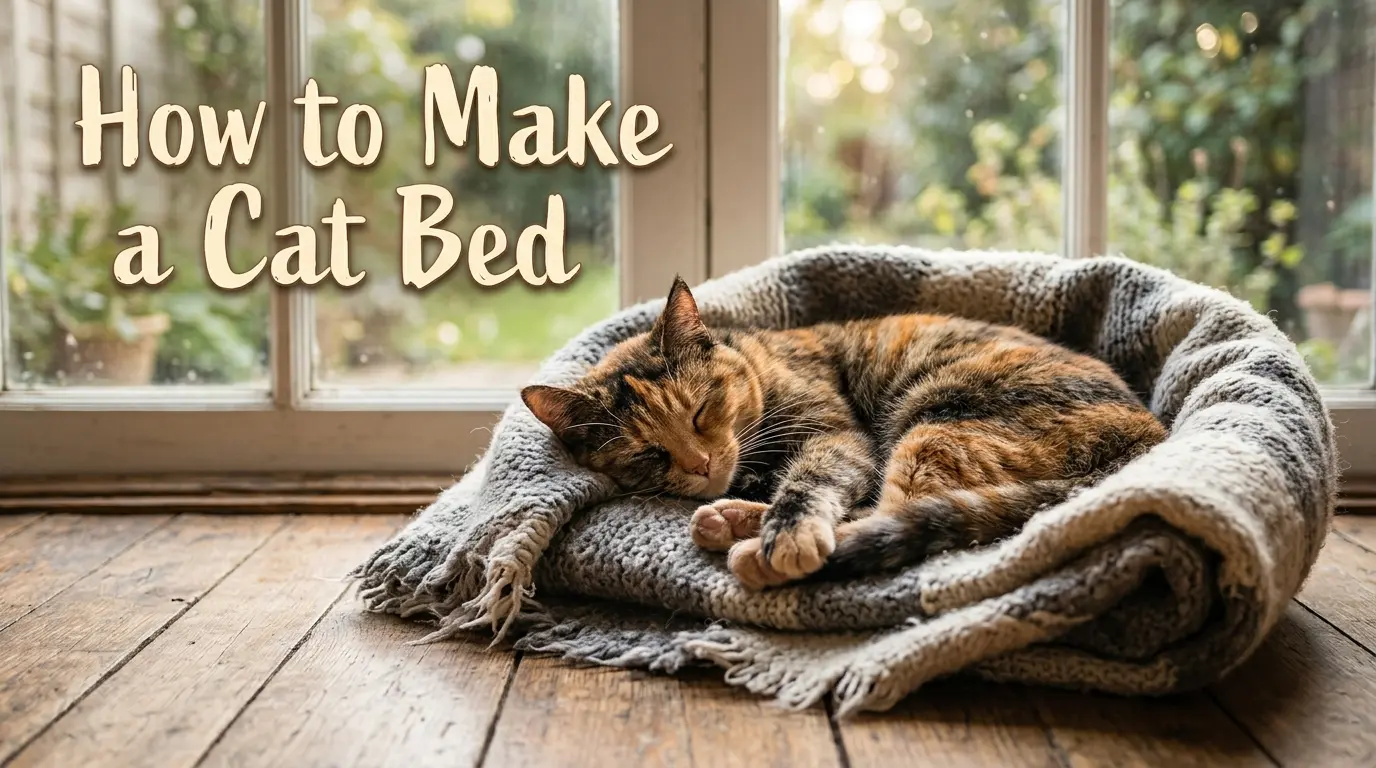
Rolling a blanket into a circular nest shape is a slightly different technique that creates a natural wall all the way around, which many cats prefer because it mimics a burrow.
Steps
- Start with a long rectangular fleece or knit blanket.
- Lay it flat and fold it in half lengthwise so you have a long doubled strip.
- Begin rolling one end tightly toward the other end, like rolling a sleeping bag.
- When you reach the end, curve the rolled blanket into a circle.
- Tuck the loose end underneath or into the inner coil to lock the shape.
- Adjust the inner opening so it is just wide enough for your cat to curl up inside.
This method takes about five minutes and works well for cats that like to feel fully enclosed. The rolled walls hold body heat effectively, making it a good choice for older cats or those that feel the cold.
How to Make a Cat Bed Out of a Box or Crate
A cardboard box lined with soft fabric is one of the most effective homemade cat beds you can make. Cats are naturally drawn to boxes because they provide enclosed, sheltered spaces.
What you need:
- A cardboard box with sides at least four inches tall
- Soft fabric or an old pillow case
- Scissors and tape or a hot glue gun
- A cut piece of foam or folded blanket for the base
Steps
- Choose a box your cat can fit in comfortably with a little extra room.
- Cut one side down to about two inches high to create an easy entry point.
- Line the inside base with cut foam or a folded blanket.
- Wrap the inner walls with soft fabric and secure it with tape or hot glue.
- Place a pillow case stuffed with batting or an old sweater on top of the base.
- Set the finished box in a spot your cat already favors.
Cardboard naturally retains warmth and is completely free if you keep delivery boxes. The only downside is that it is not washable, so lining it with removable fabric makes cleaning easier over time.
DIY Cat Bed Ideas That Require No Sewing
Not everyone has a sewing machine or the time to sew. These no sew methods produce a finished, comfortable bed with minimal effort.
The Towel Nest
Stack three to four bath towels and fold the edges upward to form low walls. Secure the corner folds with safety pins on the outside where your cat cannot reach them. This is one of the fastest DIY cat beds you can make and is fully machine washable.
The Pillow Case Bed
Take an old pillow case and stuff it with pieces of an old sweater, batting from a craft store, or old T-shirt scraps. Fold the open end underneath and sew or pin it closed. The result is a soft, flat cushion that fits inside a box or sits on its own.
The Sweater Bed
An old adult sweater stuffed and shaped into a round bed is one of the most popular DIY cat bed ideas because it carries your scent, which comforts most cats. Stuff the body of the sweater with filling, pin or tie the sleeves together to form the circular wall, and tuck the neckline closed.
Where to Place a Homemade Cat Bed for Best Results
Even the most well made cat bed will go unused if it is placed in the wrong spot. Location matters just as much as comfort when it comes to getting your cat to actually sleep in the bed you have made.
Best placement tips:
- Place the bed where your cat already tends to rest or sleep
- Choose a spot with low foot traffic and minimal noise
- Put it near a window if your cat enjoys watching outside
- Elevated spots like shelves or window sills appeal to many cats
- Avoid areas near litter boxes, food bowls, or drafty spots
- If your cat sleeps on your bed, try placing the DIY bed nearby so the scent is familiar
If your cat is already sleeping on your bed and you want to understand why, our guide on why cats pee on beds also covers why cats become attached to certain sleeping spots and how to redirect that behavior.
If your cat shows no interest after a few days, try moving the bed rather than assuming it is the problem. Cats may need a few days to accept a new sleeping spot.
Keeping a Homemade Cat Bed Clean
Washability is one of the biggest advantages of making your own cat bed. Most DIY options use removable fabric covers or fully machine washable materials.
Cleaning tips:
- Wash fabric covers every one to two weeks to reduce allergens and odor
- Use unscented detergent since strong fragrances can deter cats from using the bed
- Air dry when possible to preserve fabric softness
- Replace cardboard bases every few months as they absorb moisture over time
- Lint roll the bed between washes to remove loose fur
Accidents can happen, especially with kittens or senior cats. If your cat ever urinates on the bed, our step by step guide on how to clean cat pee from a bed will help you remove the stain and odor completely without damaging the fabric.
If you are new to cat ownership and building a routine around cat care, our must-have checklist for cat owners is a helpful starting point covering the key supplies and habits every cat owner needs.
Frequently Asked Questions
How do you make a homemade cat bed?
The easiest homemade cat bed uses a fleece blanket folded or rolled into a nest shape. For a more structured option, line a cardboard box with soft fabric and a cushion insert. No sewing is required for either method.
What can I use as a cat bed if I do not have supplies?
A folded old blanket, a towel layered into a nest shape, or a cardboard box lined with a soft T-shirt are all immediate options. Cats do not need a purpose built bed and will use almost any soft, enclosed space that feels safe and warm.
Do cats prefer open or closed beds?
Most cats prefer some degree of enclosure, especially for deep sleep. Semi-enclosed options like a rolled blanket circle or a box bed with one low entry side tend to appeal to a wide range of cats.
How do I get my cat to use a new homemade bed?
Place the bed in a spot your cat already uses, add a worn item of your clothing to it, and consider sprinkling a small amount of catnip on the surface. Avoid placing it in high traffic or noisy areas. Most cats need a few days to investigate and accept a new sleep spot.
How to make a cat bed out of a blanket without sewing?
Fold a fleece blanket in half lengthwise, then roll it tightly from one end to the other. Curve the roll into a circle and tuck the end under. The result is a no sew, fully enclosed nest your cat can curl up inside.