


No products in the cart.
How to Protect Leather Furniture from Pet Damage
Disclosure: By clicking on the product links in this article, My Pet World Store may receive a commission fee at no cost to you, the reader.
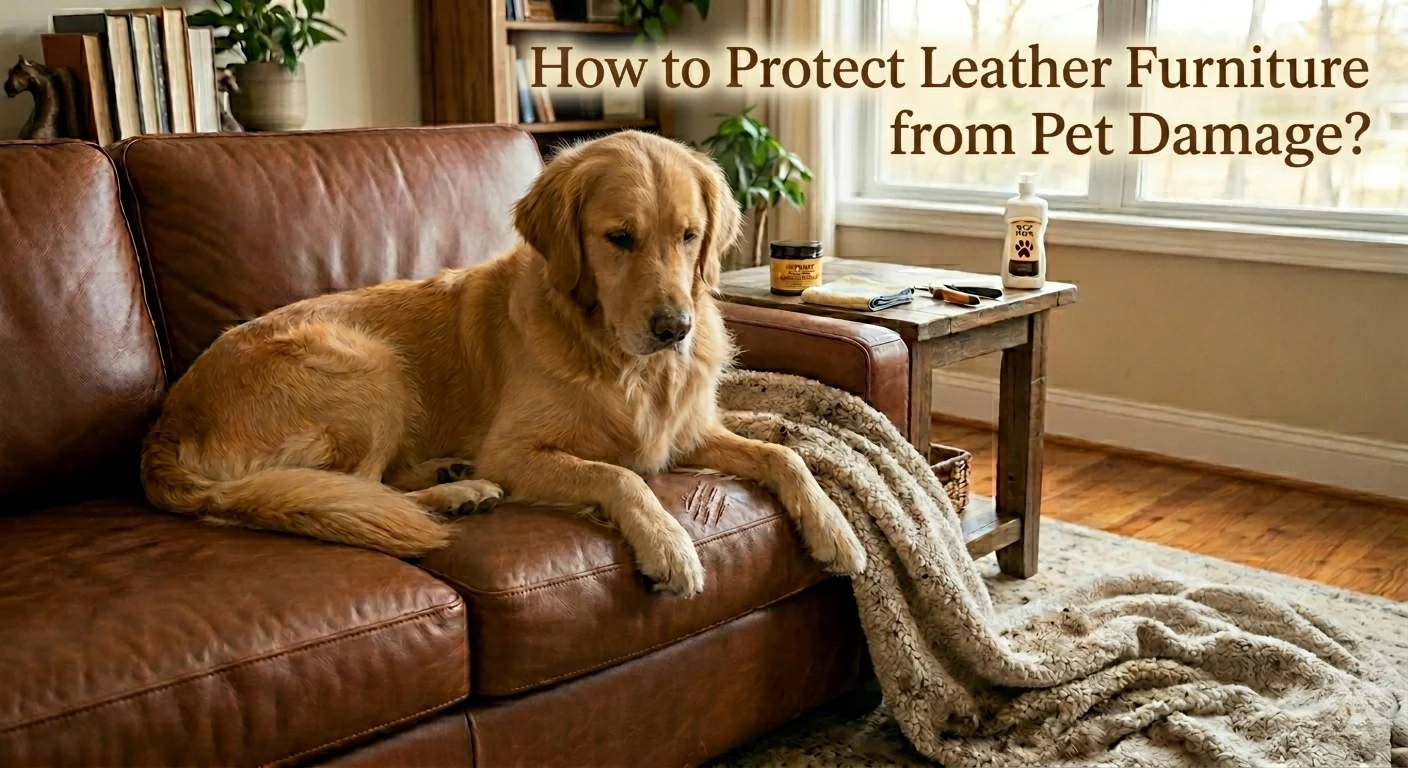
Leather furniture is one of the most durable and visually refined choices for any home interior. For pet owners, however, it presents a real challenge — sharp claws, pet hair, accidental spills, and the oils from a pet’s coat can all take a toll on leather over time. The good news is that leather, particularly full-grain and top-grain varieties, is naturally resilient and responds well to regular care. With the right preventive measures and maintenance routine, it is entirely possible to keep leather furniture looking its best in a home shared with cats or dogs. This guide covers every practical aspect of leather furniture care for pet owners — from preventing daily wear to restoring visible damage.
1. Understanding How Pets Damage Leather Furniture
Before taking protective action, it helps to understand the nature of pet-related damage. The most common types include:
- Scratch marks from claws — surface-level or deep, depending on nail length and leather grade
- Stains and moisture damage from pet saliva, urine, or wet paws
- Surface dullness and dryness caused by body oils and repeated friction from a pet lying on the same spot
- Discoloration where a pet’s coat leaves pigment transfer on lighter leather
- Odor absorption from repeated contact with damp fur
Full-grain leather tends to handle scratches better than bonded or split leather, as its surface is denser and less prone to peeling. Aniline and semi-aniline finishes, while visually rich, offer less protection against staining and are generally more vulnerable in pet-heavy households.
Identifying the type of leather before selecting any care product is important — the wrong formula can dry out certain leather grades or strip protective coatings.
2. Preventive Habits That Reduce Leather Wear
The most effective form of protection begins before any damage occurs. A few consistent habits go a long way in preserving leather furniture in a home with pets.
Regular nail trimming is the single most impactful step. Shorter nails distribute pressure across a wider surface area, significantly reducing the depth and frequency of scratch marks. Most veterinarians recommend trimming every two to four weeks, depending on the breed and activity level of the pet.
Paw cleaning after outdoor walks prevents dirt, moisture, and abrasive particles from being transferred onto leather surfaces. A damp cloth kept near the entry point of the home makes this a quick, low-effort habit.
Designated pet spaces near — but not on — leather furniture can redirect a pet’s natural resting instincts. Placing a comfortable pet bed adjacent to a leather sofa gives the animal an appealing alternative without restricting their proximity to the owner.
Protective covers and throws offer a physical barrier between the pet and the leather. Lightweight, washable covers placed over frequently used seating areas are particularly practical for households where boundary training has not been fully established. Covers should be removed and washed regularly to prevent dander and oils from accumulating and eventually transferring to the leather beneath.
3. The Role of Regular Conditioning in Leather Protection
Conditioning is one of the most important — and most frequently overlooked — steps in leather furniture care. Leather is a natural material that loses moisture over time, especially in environments with central heating, air conditioning, or low ambient humidity. Dry leather becomes brittle, develops surface cracks, and is far more susceptible to damage from pet contact.
A quality conditioner replenishes lost oils, maintains suppleness, and creates a protective surface layer that resists minor abrasion. For households with pets, conditioning every two to three months is considered an effective maintenance interval, with more frequent application recommended in drier climates or high-use areas.
When selecting a conditioning product, the formulation matters considerably. Products based on natural ingredients — particularly beeswax — are widely regarded as among the most effective for maintaining leather’s structural integrity without introducing harsh chemicals into a living environment. For pet owners specifically, the non-toxic nature of beeswax-based formulas is an important consideration, as pets regularly come into contact with treated surfaces. Using a natural leather conditioner that is free from synthetic solvents and safe for use around animals ensures the furniture is protected without creating any chemical exposure risk for the household’s pets or its human occupants.
After applying conditioner, buff the surface gently with a clean, dry microfiber cloth. This removes excess product and prevents any residue from transferring to a pet’s coat on contact.
4. Cleaning Pet Stains and Accidents from Leather
Prompt action is essential when a pet accident occurs on leather furniture. The longer a liquid sits on the surface, the deeper it penetrates, and the more likely it is to cause permanent staining or odor absorption.
For fresh spills or urine accidents, the recommended approach is:
- Blot immediately with a clean, dry cloth — never rub, as friction spreads the moisture and can push it further into the leather grain
- Wipe the affected area with a slightly damp cloth to remove residue
- Allow the surface to air dry at room temperature, away from direct heat sources
- Apply a leather conditioner once the area is fully dry to restore moisture lost during cleaning
For dried stains, a leather-specific cleaner applied with a soft cloth can lift residue without damaging the surface finish. Household cleaners, bleach solutions, or alcohol-based products should be avoided entirely — these strip the leather’s natural oils and degrade its finish over time.
Pet hair accumulation is best managed with a dry microfiber cloth, a vacuum attachment with a soft brush head, or a lint roller. These remove surface hair without generating static or scratching the leather finish.
5. Repairing Scratch Marks and Worn Areas
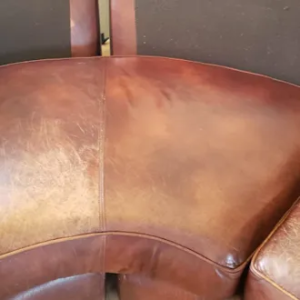
Even with preventive care, scratches and surface wear are an inevitable reality in homes with active pets. The appropriate repair approach depends on the depth and extent of the damage.
Surface-level scratches — those that have not broken through the leather’s top layer — can often be minimized by applying a conditioning product and massaging it into the affected area in circular motions. The leather absorbs the conditioner, softens, and the scratch frequently becomes less visible as the fibers rehydrate.
Deeper scratches and gouges that have broken the surface require a repair product formulated for structural restoration. Before addressing cracks, discoloration, or areas where the surface has deteriorated, pet owners should assess whether the leather has dried out — dehydrated leather responds poorly to repair treatments and often requires a conditioning step first.
For furniture pieces showing signs of worn patches, color loss, or surface cracking alongside physical scratch damage, a dedicated Leather Repair Cream for Furniture addresses multiple forms of deterioration simultaneously — softening the leather, restoring its appearance, and helping the surface regain its protective integrity. This type of product is particularly useful for older pieces where years of pet contact have compounded the visible wear. Repairs should always be tested on a hidden section of the furniture first, as leather varies in finish, color, and porosity.
6. Building a Long-Term Maintenance Routine
Protecting leather furniture in a pet household is less about a single intervention and more about a consistent, repeatable routine.
- Weekly: Remove pet hair with a dry microfiber cloth or soft vacuum attachment. Wipe down surface areas where the pet rests most frequently.
- Monthly: Inspect the surface for new scratches, dull patches, or areas showing early signs of dryness. Clean the leather with a product appropriate for its finish type.
- Every 2–3 Months: Apply a leather conditioner across the full surface, paying additional attention to areas of high contact. Buff dry with a clean microfiber cloth.
- Seasonally: Assess whether any repair treatment is needed on areas showing visible wear. Adjust conditioning frequency if the climate shifts significantly toward dry or humid conditions.
Leather furniture that receives this level of consistent care typically outlasts fabric alternatives by a substantial margin — even in active pet households. Recognizing the early signs your leather sofa needs conditioning allows pet owners to intervene before minor dryness develops into cracking or permanent surface damage.
Conclusion
Leather furniture and pets are not incompatible — they simply require a more informed approach to care. Regular conditioning, prompt stain management, preventive grooming habits, and an appropriate repair strategy when damage occurs are the pillars of maintaining leather in a pet-friendly home. The material’s inherent durability, ease of cleaning, and resistance to allergens already make it one of the more practical choices for pet owners. With a structured maintenance routine and the right products, leather furniture can retain its appearance and structural quality for many years, regardless of the activity level of the household’s animals.
Further reading

DOGS AVAILABLE FOR ADOPTION FROM PETS2ADOPT
Sep 22, 2022

PETS2ADOPT HOME- CHECK FORM FOR DOGS ADOPTION
Jul 20, 2022