
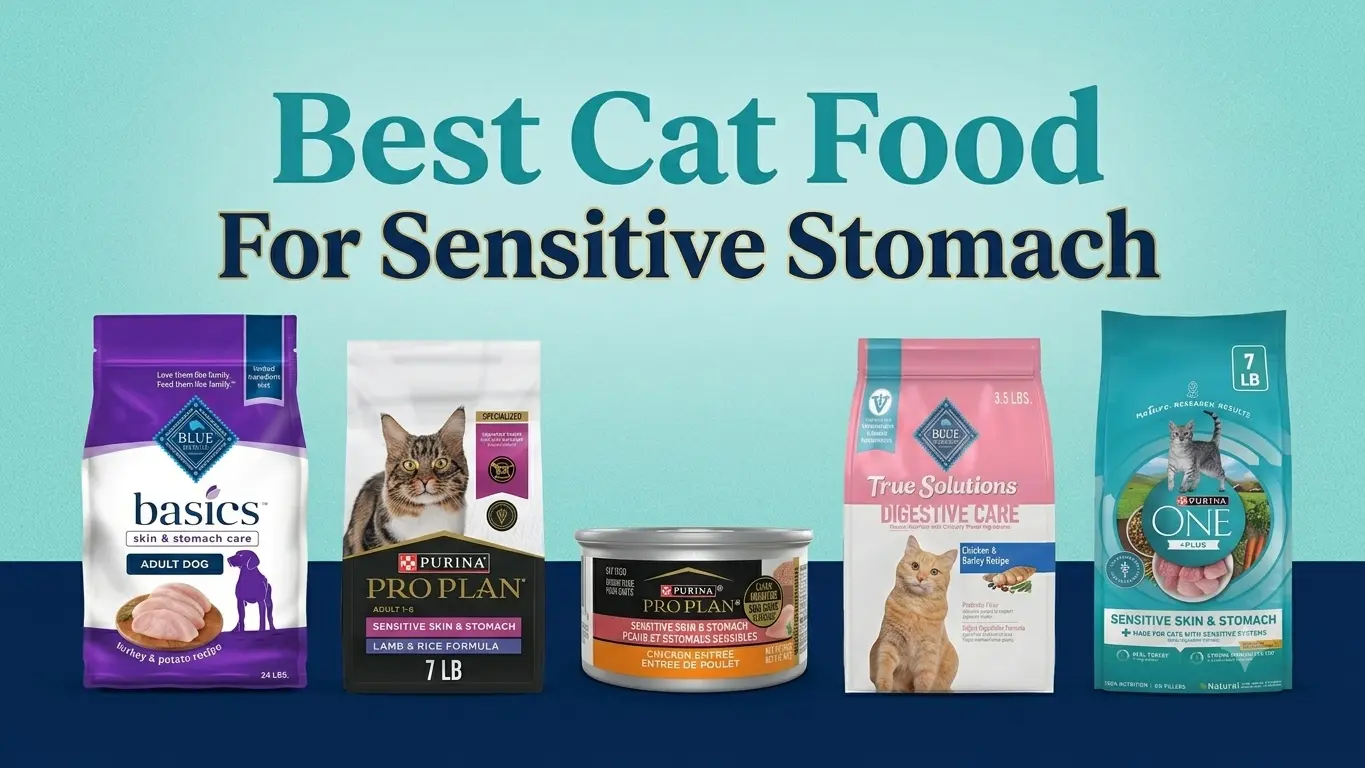
The best cat food for a sensitive stomach uses a single easy-to-digest protein, skips common irritants like corn and soy, and adds fiber or probiotics for gut support. Purina Pro Plan Sensitive Skin & Stomach is our top overall pick for most cats. We compared ingredients, digestibility, and nutrition across the most-searched sensitive-stomach formulas to find which ones actually hold up.
What we found is that the formulas that worked best shared three things in common: one clear protein source, added fiber or probiotics, and no unnecessary fillers. Below are the five that came out ahead, along with who each one fits best.
Compare the Top Sensitive Stomach Cat Foods
| Product Name | Best For | Key Feature | Link |
|---|---|---|---|
| Purina Pro Plan Sensitive Skin & Stomach, Lamb & Rice Formula (Dry) | Best Overall | Salmon/oatmeal-free lamb & rice, live probiotics | Check Price |
| Purina Pro Plan Sensitive Skin & Stomach Wet Pate, Grain Free Chicken Entree | Best Wet Food | Grain-free pate, high moisture content | Check Price |
| Blue Buffalo True Solutions Blissful Belly | Best for Digestion Support | Real chicken, prebiotic fiber, brown rice | Check Price |
| Hill’s Science Diet Adult Sensitive Stomach & Skin | Best Vet Recommended | Prebiotic fiber blend, easy-to-digest ingredients | Check Price |
| Purina ONE +Plus Sensitive Skin & Stomach, Turkey | Best Budget | Turkey first ingredient, rice, natural fiber blend | Check Price |
Our Top Sensitive Stomach Cat Food Picks
Purina Pro Plan Sensitive Skin & Stomach, Lamb & Rice Formula (Dry)
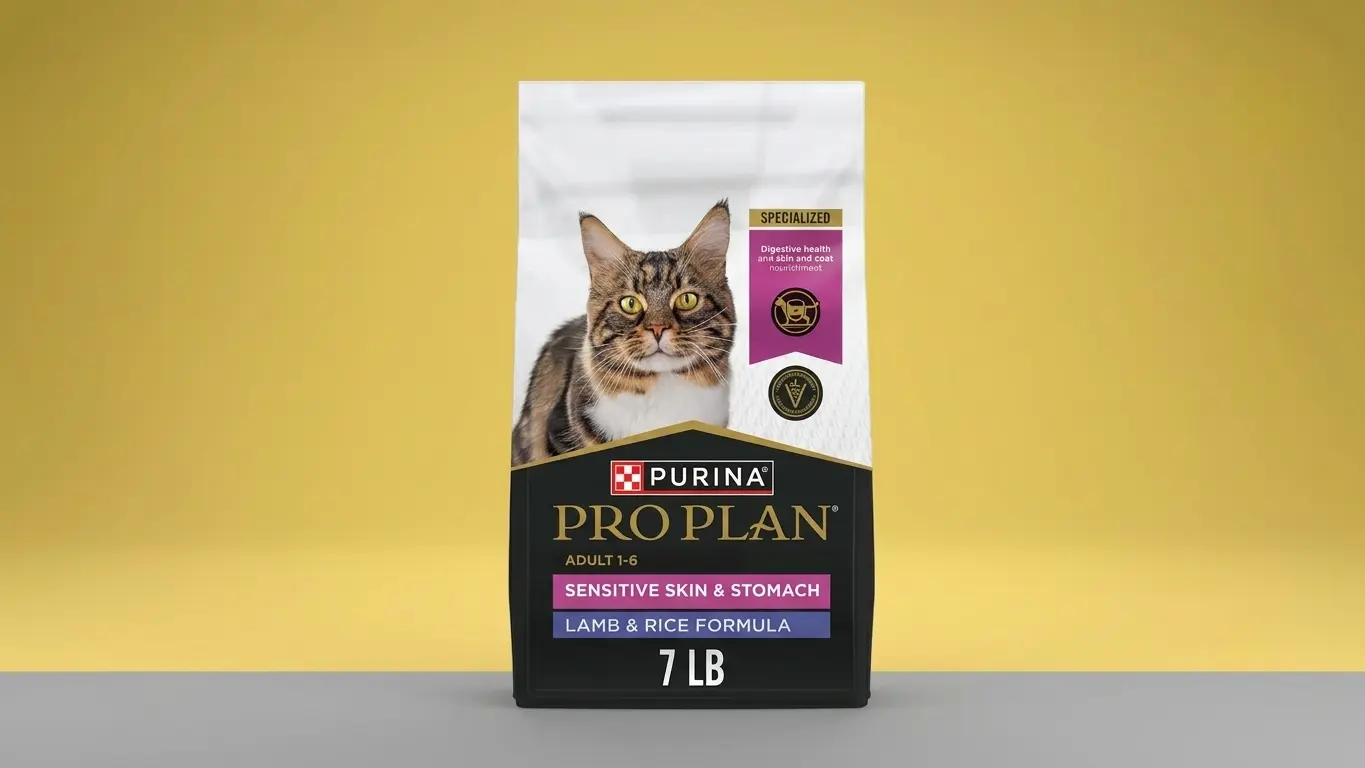
This dry formula is built around a single easy-to-digest protein source paired with rice, which tends to sit well with cats who react to heavier ingredient lists. It includes live probiotics for digestive balance, along with fish oil for skin and coat support. Households already using Purina products for a dog or another cat will find this an easy formula to slot into a mixed feeding routine, and the kibble size works for most adult cats without dental issues.
★ Why We Picked ItA widely available, vet-formulated option with a track record for sensitive digestion in adult cats.
Pros
- Single animal protein source reduces ingredient triggers
- Probiotics support ongoing gut health, not just short-term relief
- Available in multiple bag sizes for cost planning
Cons
- Kibble only, so it will not help cats who need extra hydration from food
Purina Pro Plan Sensitive Skin & Stomach Wet Pate, Grain Free Chicken Entree
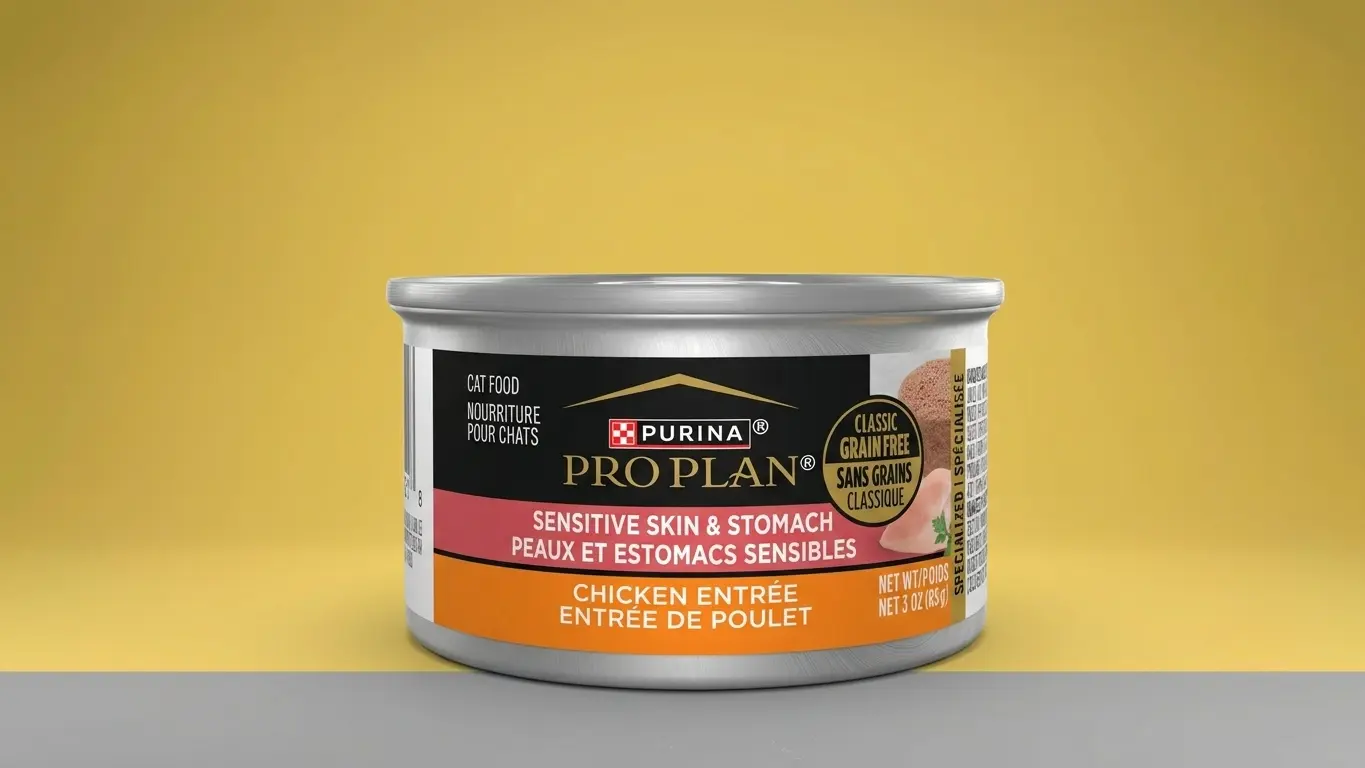
For cats that do better on wet food, this grain free pate swaps kibble for a softer, higher moisture texture that is generally easier on digestion. The chicken forward recipe skips corn, wheat, and soy, which are common irritants in cheaper wet foods. It is a reasonable option for older cats or cats recovering from a stomach flare up who need extra water intake alongside their meals.
★ Why We Picked ItGrain free, high moisture format for cats who do not tolerate dry kibble well.
Pros
- Smooth pate texture is gentle after digestive upset
- No corn, wheat, or soy fillers
- Higher water content supports hydration
Cons
- Cans need refrigeration once opened and cost more per meal than dry food
Blue Buffalo True Solutions Blissful Belly
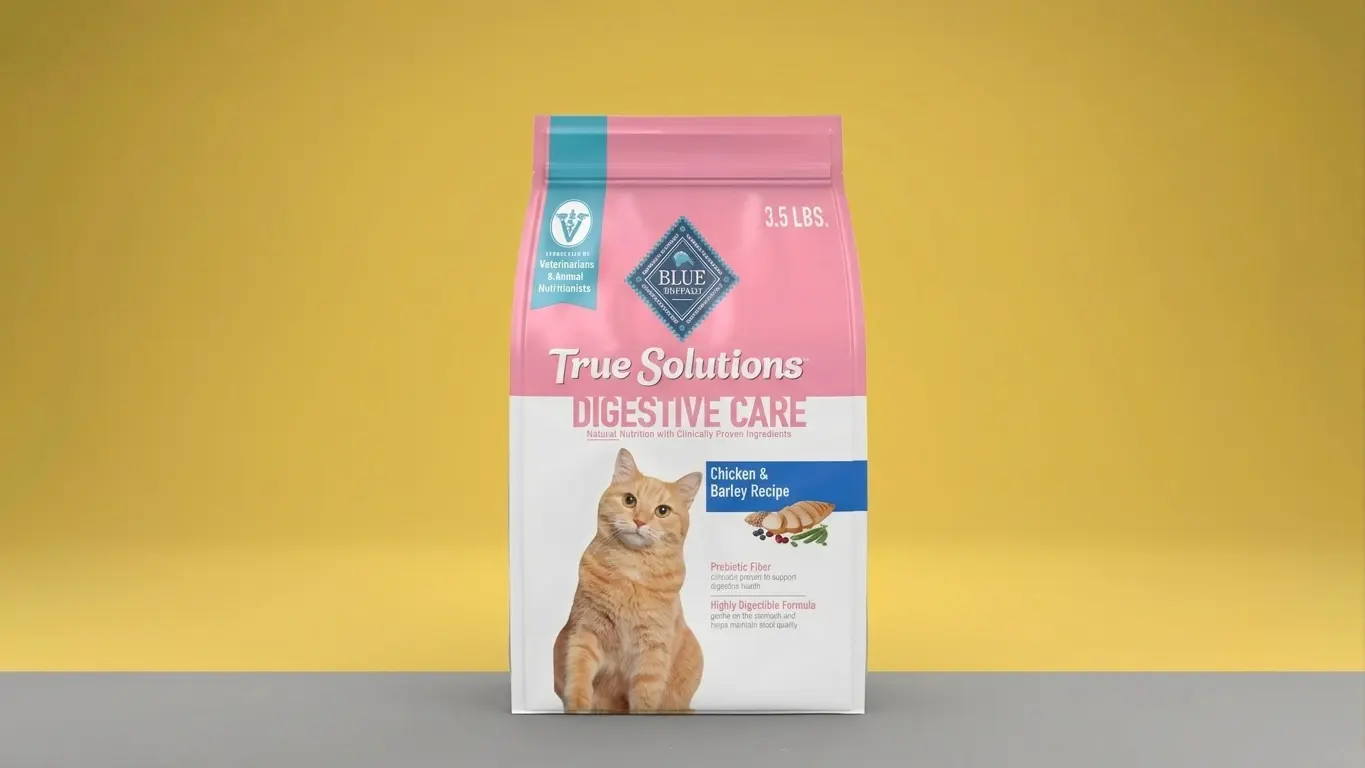
This formula leads with real chicken and adds prebiotic fiber specifically aimed at supporting a healthy gut microbiome rather than just avoiding common allergens. Brown rice rounds out the recipe for steady energy without leaning on heavier grains. It is a solid middle ground for cats who need digestive support but do not have a diagnosed food allergy, and it is offered across multiple life stages.
★ Why We Picked ItPurpose built for digestion with prebiotic fiber rather than a general sensitive skin formula.
Pros
- Real chicken as the first ingredient
- Prebiotic fiber targets gut health specifically
- Available across dry and wet options for different life stages
Cons
- Not grain free, so it is not ideal for cats with a confirmed grain sensitivity
Hill’s Science Diet Adult Sensitive Stomach & Skin
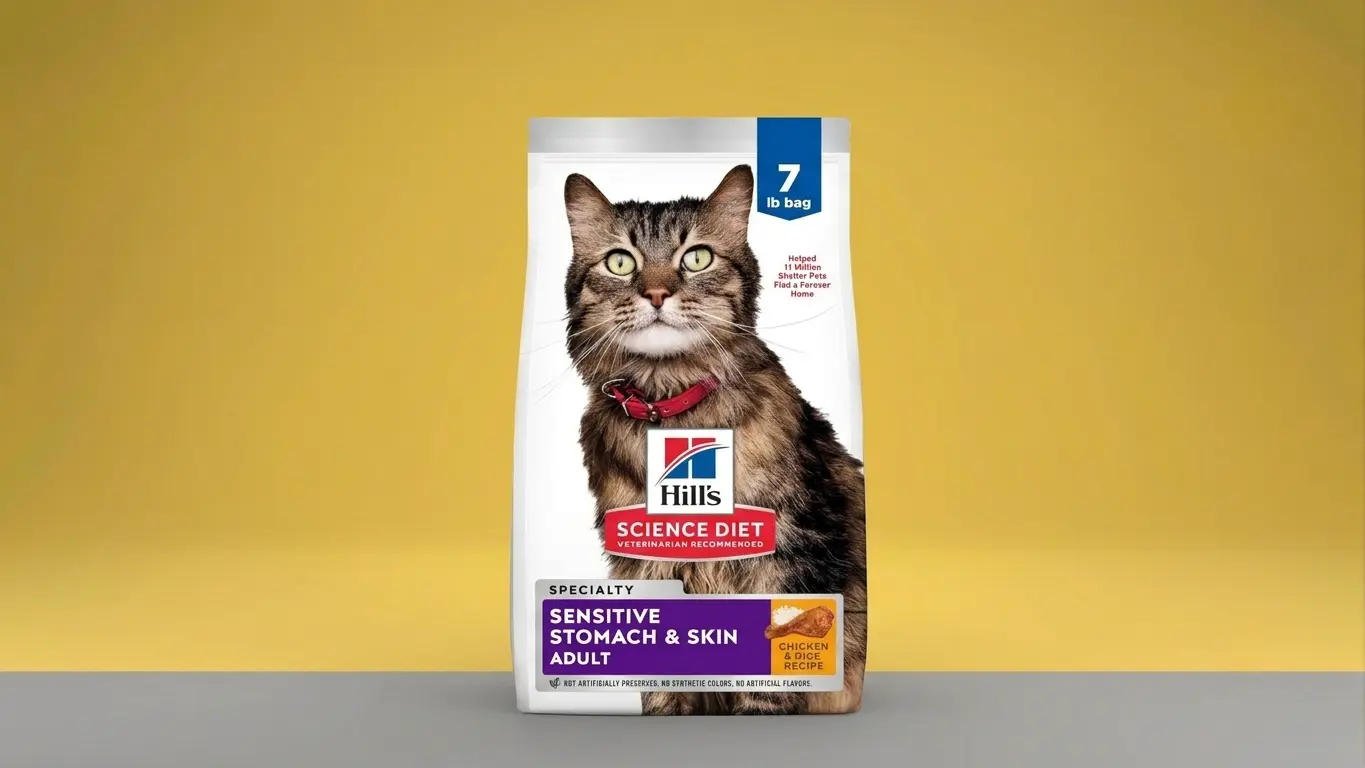
Hill’s is one of the most frequently recommended brands by veterinarians for digestive sensitivity, and this formula focuses on a blend of prebiotic fiber and easily digestible ingredients to support both stomach and skin health together. It is a good fit for cats whose sensitivity shows up as both digestive upset and a dull or flaky coat, since it addresses both at once rather than treating them as separate issues.
★ Why We Picked ItA clinically studied brand that is frequently the first recommendation from vets for combined stomach and skin sensitivity.
Pros
- Backed by extensive veterinary formulation research
- Addresses skin and coat alongside digestion
- Consistent formula across most major retailers
Cons
- Priced higher than grocery store brands
Purina ONE +Plus Sensitive Skin & Stomach, Turkey
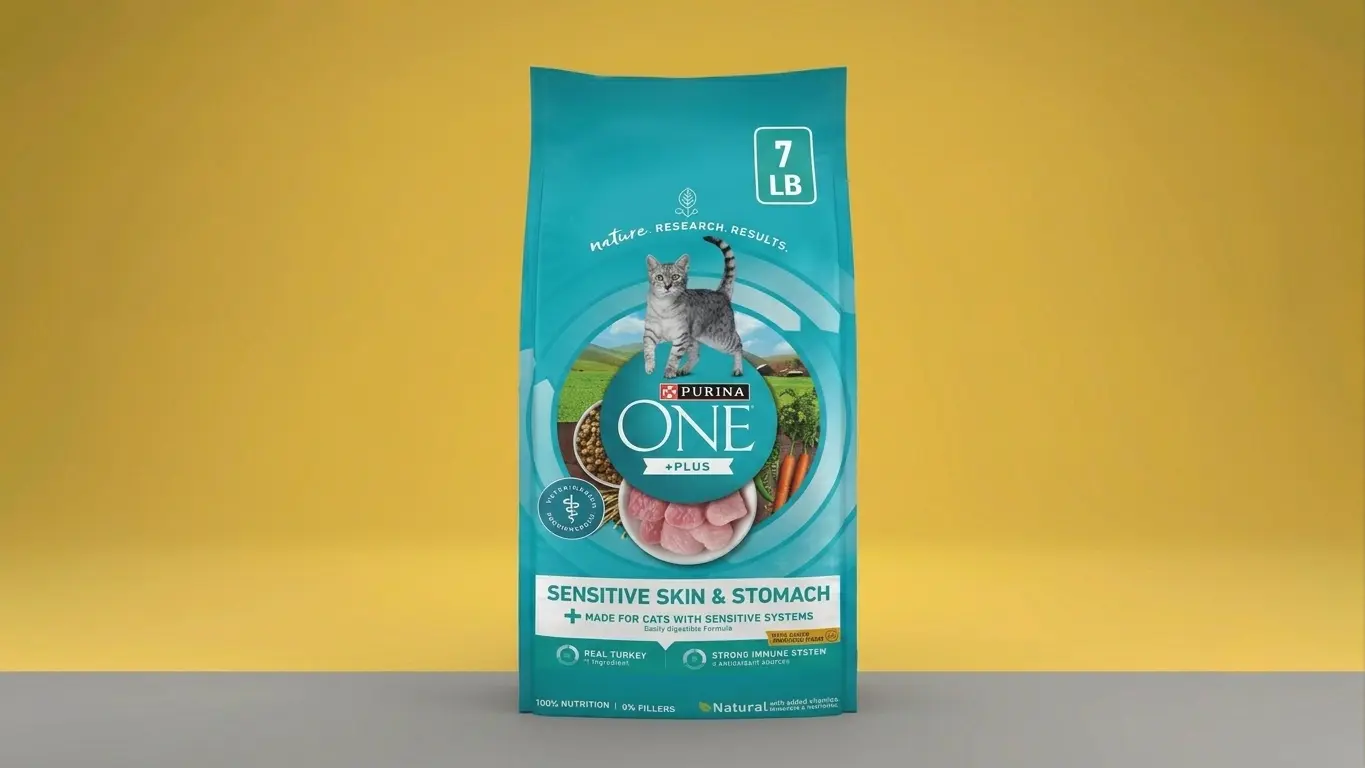
This is the more budget-friendly formula in the Purina lineup, using turkey as the first ingredient along with rice and a natural fiber blend for digestion. It will not have the same clinical backing as the Pro Plan or Hill’s lines, but it covers the basics well for cats with mild sensitivity and owners who are testing whether a sensitive stomach formula helps before committing to a pricier option.
★ Why We Picked ItThe most accessible price point for owners who want to try a sensitive stomach formula first.
Pros
- Lower cost per pound than premium sensitive stomach formulas
- Turkey first ingredient with a simple fiber blend
- Widely stocked, so it is easy to find and reorder
Cons
- Formula changes are less extensively studied than Pro Plan or Hill’s
What should you look for in cat food for a sensitive stomach?
Look for a single named protein source, added fiber or probiotics, and no corn, wheat, or soy fillers. These three factors affect digestibility more than any marketing claim on the bag.
Wet food is generally easier on a sensitive stomach than dry kibble because of its higher moisture content, though many cats do fine on either once the right protein source is identified.
Why do cats develop sensitive stomachs in the first place?
Most sensitive stomach issues in cats come from a specific ingredient, most often a protein source, rather than a permanent condition. Sudden diet changes, low quality fillers, and food allergies are the three most common triggers.
If symptoms continue after a full switch to a sensitive stomach formula, it is worth ruling out other causes with a vet, since chronic vomiting can also point to unrelated health issues.
Is wet or dry food better for a cat with a sensitive stomach?
Wet food tends to be gentler because of its moisture content and lack of processing, but dry food with the right protein source and added probiotics also works well for many cats. The better choice often comes down to your individual cat’s preference and how they respond to the switch.
Buying Guide: How to Choose the Right Formula
- Protein source: pick a single named protein, such as chicken, turkey, or lamb, over vague terms like ‘meat meal’
- Fiber and probiotics: formulas with added prebiotic fiber or live probiotics support digestion, not just avoid triggers
- Fillers to avoid: corn, wheat, and soy are the most common irritants in budget formulas
- Wet vs dry: higher moisture wet food is usually gentler, especially right after a flare up
- Life stage: kittens, adults, and senior cats have different digestive needs, so match the formula to your cat’s age
- Transition time: switch gradually over seven to ten days to avoid triggering the exact symptoms you are trying to fix
Frequently Asked Questions
What’s the best cat food for a cat that throws up?
A formula with a single easy to digest protein and no grain fillers, such as a sensitive skin and stomach formula, is usually the best starting point for a cat that regularly vomits after eating.
What food is easiest on a cat’s stomach?
Wet, pate style food with a single named protein and added fiber is generally the easiest on a cat’s stomach because of its moisture content and simple ingredient list.
What are signs of food intolerance in cats?
Common signs include vomiting after meals, soft or inconsistent stool, excessive gas, and a dull coat. Persistent symptoms beyond two weeks of switching food are worth discussing with a vet.
What do you feed cats with sensitive stomachs?
Most owners start with a dedicated sensitive skin and stomach formula from a trusted brand, then adjust between wet and dry based on how their cat responds over the first two weeks.