
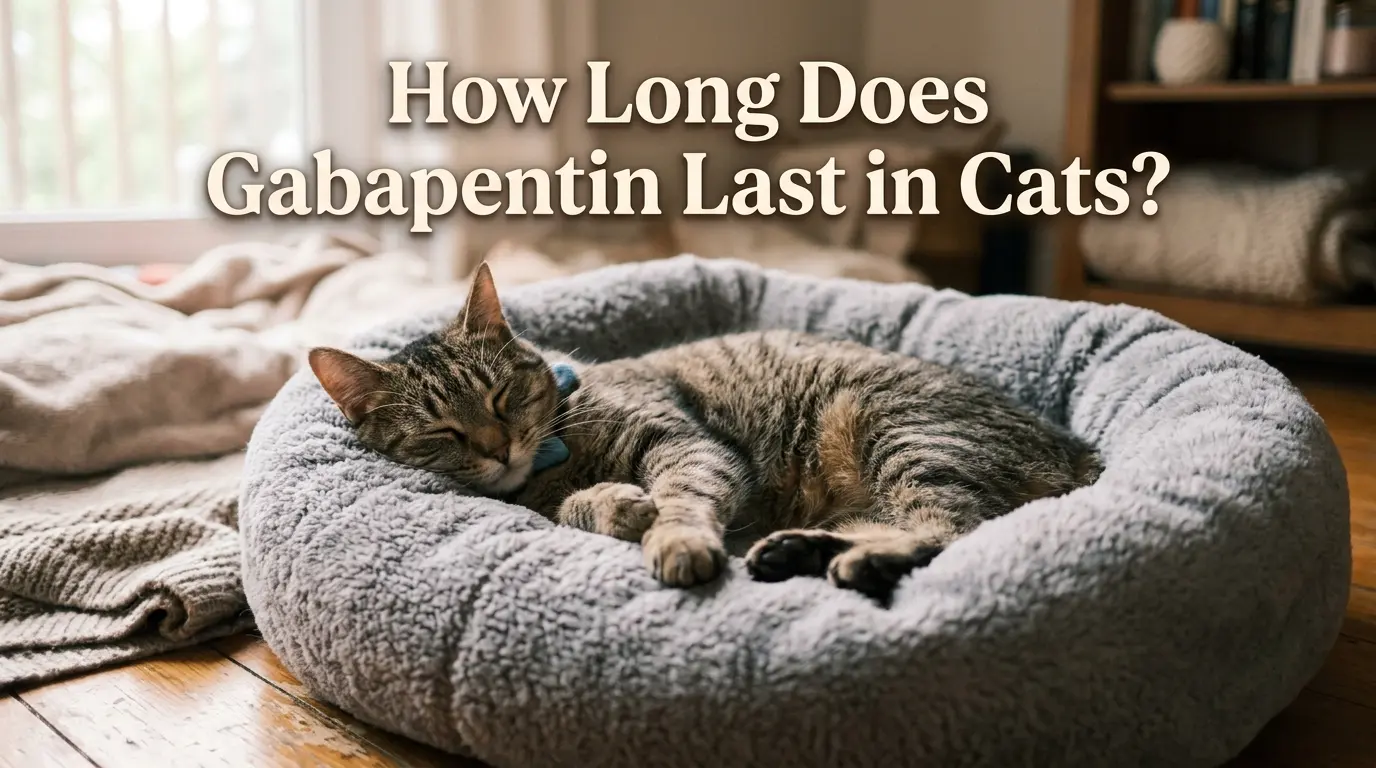
Gabapentin typically lasts between six and eight hours in cats, though this can vary based on dose, age, and how the cat’s body processes the medication. Most cats begin feeling calmer or drowsy within one to two hours after taking it, and these effects gradually fade as the medication clears from the body.
How Long Does Gabapentin Last in Cats
Gabapentin generally stays active in a cat’s system for about six to eight hours. Some cats process it faster or slower depending on their metabolism, age, and overall health.
Kittens, senior cats, and cats with reduced kidney function often take longer to clear the medication, which can extend how long the calming or drowsy effects last. Because of this, dosing and timing should always follow the exact plan your veterinarian recommends for your individual cat.
How Long Does It Take Gabapentin to Work in Cats
Most cats start showing signs of relaxation or drowsiness within one to two hours of taking gabapentin. For situations like vet visits or travel, veterinarians often suggest giving the dose ninety minutes to two hours beforehand.
Giving the medication too close to a stressful event may mean it has not fully taken effect yet, while giving it too early may mean the calming effects wear off before they are needed most. Pairing proper timing with a secure airline approved cat carrier for travel days can make the whole experience noticeably less stressful for a nervous cat.
What Affects How Long Gabapentin Lasts
Several factors influence how long gabapentin stays active and how strongly a cat responds to it.
- Body weight and overall size of the cat
- Age: kittens and senior cats often metabolize medication differently
- Kidney function: gabapentin is processed through the kidneys
- Whether the cat has eaten recently
- Individual sensitivity: some cats are simply more responsive to sedatives
Common Effects to Expect
Understanding typical effects helps you recognize normal behavior versus something that needs veterinary attention.
- Mild drowsiness or sleepiness
- Wobbly or uncoordinated walking
- Reduced anxiety or calmer behavior in stressful situations
- Lower appetite for a few hours
- A relaxed, sleepy posture similar to settling in for a nap
Cats often seek out a soft, quiet spot to rest while the medication takes effect, so having a cozy cat bed nearby can help her settle in more easily during this time.
Gabapentin Side Effects in Cats
Most cats tolerate gabapentin well, though mild side effects can occur, especially at higher doses.
- Excessive sedation or difficulty staying awake
- Loss of coordination or stumbling
- Mild digestive upset in sensitive cats
- Unusual quietness or withdrawal from normal activity
These effects are usually temporary and fade as the medication clears from the body. A cat who seems withdrawn even outside of medication days may be showing signs your cat could be depressed, which is worth ruling out separately from any medication effects.
Step by Step Guide to Giving Gabapentin Safely
- Confirm the exact dose and timing your veterinarian prescribed for your cat’s weight.
- Give the dose with a small amount of food unless your veterinarian says otherwise, since this can reduce stomach upset.
- Time the dose so it takes effect before a stressful event, usually one to two hours in advance.
- Keep your cat in a quiet, safe space while the medication takes effect.
- Monitor for normal drowsiness versus signs of an unusual reaction.
- Offer fresh water once your cat is alert enough to drink comfortably, since easy access to a reliable water bowl for cats supports her recovery and keeps her hydrated as the medication wears off.
Using Gabapentin for Travel or Vet Visits
Many veterinarians prescribe gabapentin specifically to reduce anxiety during travel or clinic visits. Giving the dose at home before placing your cat in her carrier often results in a calmer, less stressful trip.
New cat owners preparing for an upcoming vet visit often find it helpful to work through a first time cat owner checklist ahead of time, since knowing what to expect on visit day can ease stress for both of you.
Senior Cats and Gabapentin
Senior cats are commonly prescribed gabapentin for chronic joint discomfort or anxiety related to aging. Because older cats often process medication more slowly, effects may last longer and sedation may be more noticeable.
Owners of senior cats should watch closely for excessive wobbliness or prolonged grogginess and report anything unusual to their veterinarian.
Common Mistakes Pet Owners Make
- Giving a dose too close to the stressful event, before it has taken effect
- Assuming a wobbly or sleepy cat needs a larger dose next time without veterinary guidance
- Stopping or adjusting the medication without consulting a veterinarian
- Giving leftover doses from a previous prescription without confirming they still apply
When Home Care Is Enough
Mild drowsiness, wobbliness, or a quieter mood are expected and typically resolve on their own within several hours. Letting your cat rest in a calm space is usually all that is needed.
When to Contact a Veterinarian Immediately
Certain reactions are not typical and should be evaluated right away.
- Extreme sedation where the cat is difficult to wake
- Signs of an allergic reaction such as swelling or difficulty breathing
- Vomiting that continues beyond a single episode
- Accidental ingestion of more medication than prescribed
A veterinarian is best equipped to evaluate these symptoms and provide guidance specific to your cat’s health history.
Myths Versus Facts About Gabapentin in Cats
| Myth | Fact |
|---|---|
| Gabapentin works the same way for every cat. | Response varies based on weight, age, and kidney function. |
| More medication always means better results. | Dosage must be set by a veterinarian and should never be increased without guidance. |
| Sedation means something is wrong. | Mild drowsiness is a normal and expected effect at typical doses. |
| Gabapentin is only used for pain. | It is also commonly used to reduce anxiety during travel and vet visits. |
Final Thoughts on Gabapentin Duration in Cats
Gabapentin typically lasts about six to eight hours in cats, with calming or drowsy effects usually beginning within one to two hours of the dose. Knowing this timeline helps you plan around vet visits, travel, or procedures with more confidence.
Every cat responds a little differently based on age, weight, and health, so always follow your veterinarian’s specific dosing instructions. If anything about your cat’s response seems unusual or concerning, reach out to your veterinarian for guidance tailored to her needs.
Frequently Asked Questions
What to expect after giving a cat gabapentin?
Expect mild drowsiness, relaxed behavior, and sometimes slight wobbliness within one to two hours after the dose.
What happens if I give my cat too much gabapentin?
An overdose can cause extreme sedation, loss of coordination, or trouble waking, and requires immediate veterinary attention.
Is gabapentin hard on cats?
Most healthy cats tolerate gabapentin well, though cats with kidney issues may need adjusted dosing under veterinary supervision.
How to tell if gabapentin is working in cats?
A cat appears calmer, more relaxed, and less anxious, often becoming sleepy within one to two hours of the dose.
How long will a cat be sleepy after gabapentin?
Sleepiness usually lasts several hours and typically resolves within six to eight hours as the medication wears off.