


The Outward Hound Fun Feeder Slo Bowl is the best slow feeder dog bowl overall, thanks to its proven maze design, multiple size options, and dishwasher-safe build that works for most breeds. For flat-faced dogs, the Neater Feeder Slow Feed Bowl is the top pick, while the LickiMat Wobble leads for wet food users. Budget shoppers get solid value from the JASGOOD Slow Feeder, and large breed owners who want a real challenge will find the Northmate Green hard to beat.
Slow feeder dog bowls use raised ridges, maze patterns, or wobble designs to force dogs to eat more slowly, which helps prevent bloat, vomiting, and gas caused by gulping air with food. They also double as a low-effort mental enrichment tool at every meal. Most options are BPA-free, dishwasher safe, and available in sizes that fit everything from chihuahuas to great danes.
Quick Comparison: Best Slow Feeder Dog Bowls at a Glance
| Product Name | Best For | Key Feature | Price Tier | Link |
|---|---|---|---|---|
| Outward Hound Fun Feeder Slow Bowl | Most dog sizes | Maze ridge design, dishwasher safe | Budget | Check Price on Amazon |
| JASGOOD Slow Feeder Bowl | Small to medium dogs | Non-slip base, BPA-free plastic | Budget | Check Price on Amazon |
| Neater Feeder Slow Feed Bowl | Flat-faced dog breeds | Shallow wide design, easy to clean | Mid-range | Check Price on Amazon |
| LickiMat Wobble Slow Feeder | Wet food and treats | Wobble motion, mental stimulation | Mid-range | Check Price on Amazon |
| Northmate Green Slow Feeder | Large active breeds | Grass blade maze, large capacity | Premium | Check Price on Amazon |
Top Picks: Best Slow Feeder Dog Bowls Reviewed
Outward Hound Fun Feeder Slo Bowl
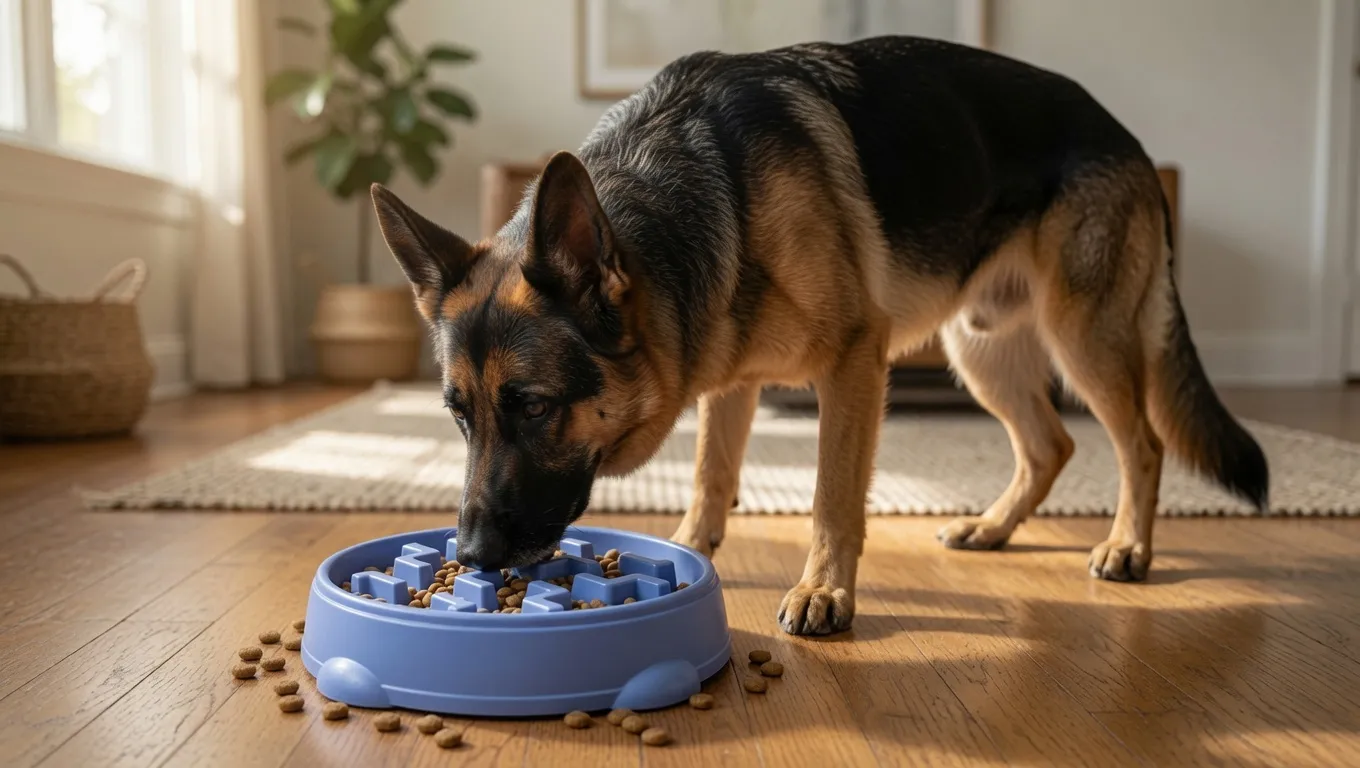
The Outward Hound Fun Feeder is the top-selling slow feeder dog bowl on Amazon, available in four sizes from mini to large. It uses a deep maze pattern that forces dogs to work around raised ridges, stretching mealtime from under a minute to five minutes or more. The BPA-free plastic is top-rack dishwasher safe and the non-slip base holds firm even for energetic eaters. It is the most versatile pick on this list and works reliably across nearly every breed.
Why We Picked It
• Top-selling slow feeder on Amazon with thousands of verified five-star reviews.
• Available in four sizes and multiple colors to suit any household.
Pros:
• Multiple size options for small, medium, and large dogs
• Deep maze design provides strong mental enrichment at meal time
• Dishwasher safe top rack for easy cleaning
• BPA-free food-safe material, safe for daily use
Cons:
• The deep ridges can trap wet food and require thorough handwashing occasionally
• Not ideal for senior dogs with dental issues who may find the deep maze uncomfortable
JASGOOD Slow Feeder Bowl
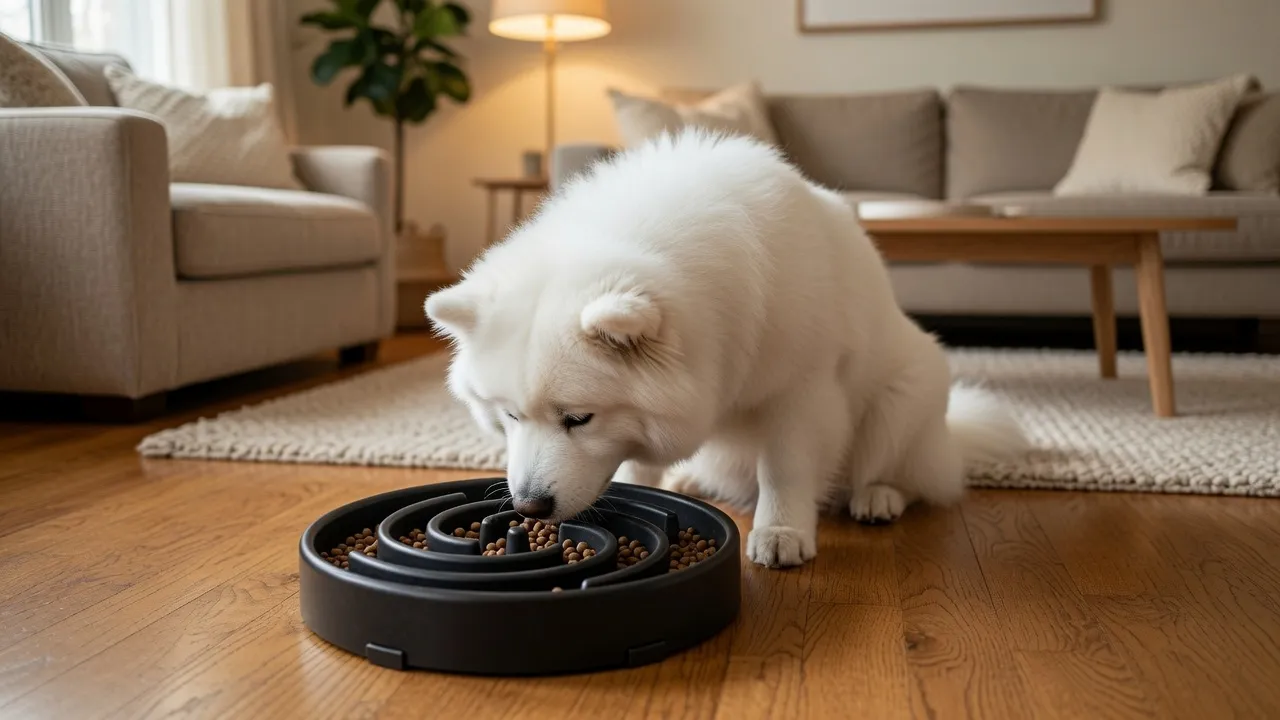
The JASGOOD Slow Feeder Bowl is a budget-friendly option that delivers solid slow-feeding performance for small to medium dogs. It uses a floral maze pattern that spreads kibble across the surface, encouraging dogs to eat in smaller bites. The rubberized non-slip base grips tile and hardwood well, keeping the bowl in place throughout the meal. It is lightweight, easy to rinse clean, and a great starting point for owners trying a slow feeder for the first time.
Why We Picked It
• Excellent entry-level slow feeder at a budget price point.
• Lightweight and easy to handle for pet owners of all ages.
Pros:
• Very affordable, good for first-time slow feeder buyers
• Non-slip base works well on tile and hardwood
• Lightweight and portable, good for travel
Cons:
• Smaller capacity, not suitable for large breeds eating more than two cups of kibble
• The maze is shallower than premium options, so determined dogs may still eat quickly
Neater Feeder Slow Feed Bowl
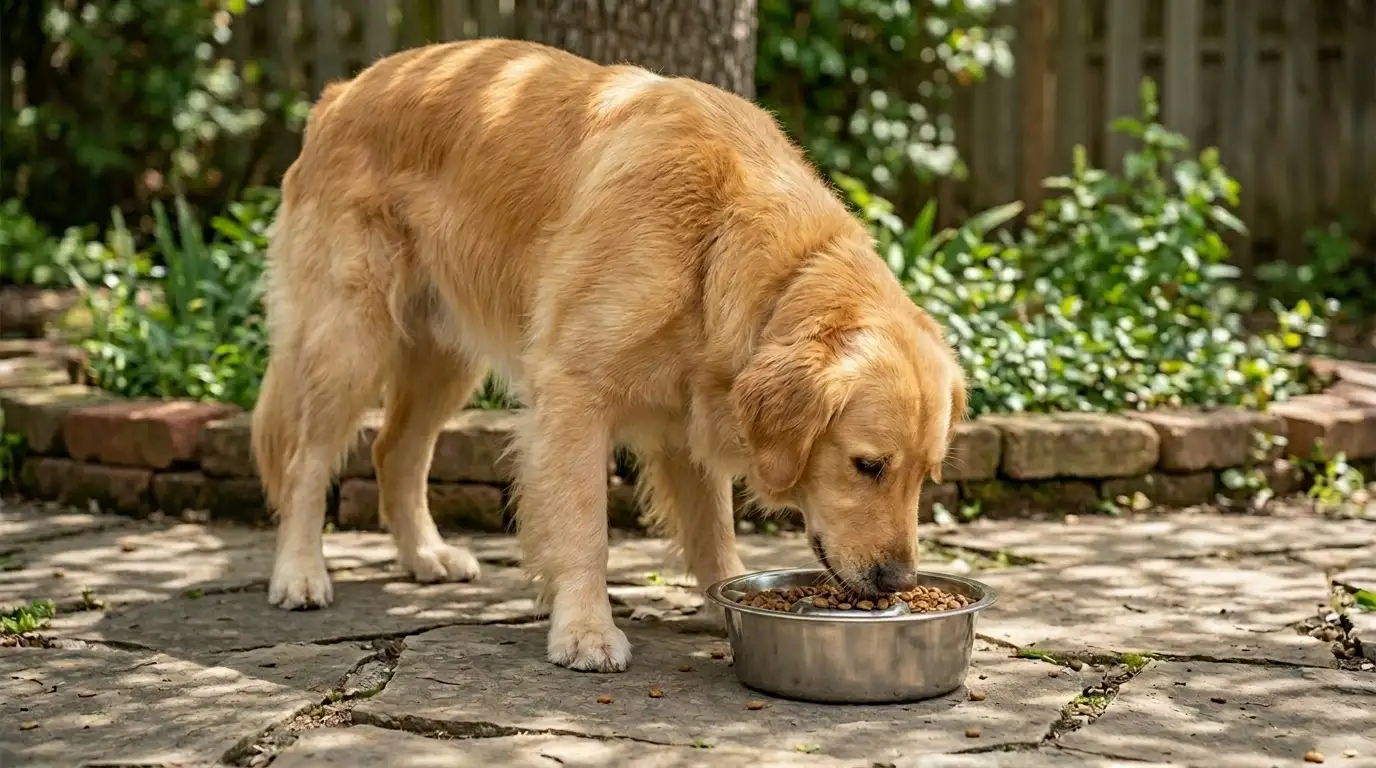
The Neater Feeder Slow Feed Bowl is purpose-built for flat-faced breeds like bulldogs, pugs, and French bulldogs. Its shallow, wide design lets brachycephalic dogs eat comfortably without pressing their faces into deep grooves or straining their necks. The smooth spread-out surface slows eating without requiring uncomfortable deep reaching. It rinses clean quickly and is also a comfortable choice for senior dogs who struggle with deeper maze styles.
Dogs that eat too fast are also at risk of swallowing air, which contributes to gas and discomfort. If you are working on managing your dog’s feeding habits, pairing a slow bowl with a consistent feeding schedule makes a real difference.
Why We Picked It
• One of the few slow feeder bowls designed specifically for flat-faced breed comfort.
• Wide shallow design prevents breathing strain during meals.
Pros:
• Best slow feeder for brachycephalic breeds like pugs and bulldogs
• Wide stable base reduces tipping
• Easy to clean, smooth interior surface
Cons:
• The shallow maze offers less challenge for dogs that are not flat-faced
• May not slow down a very determined large breed significantly
LickiMat Wobble Slow Feeder
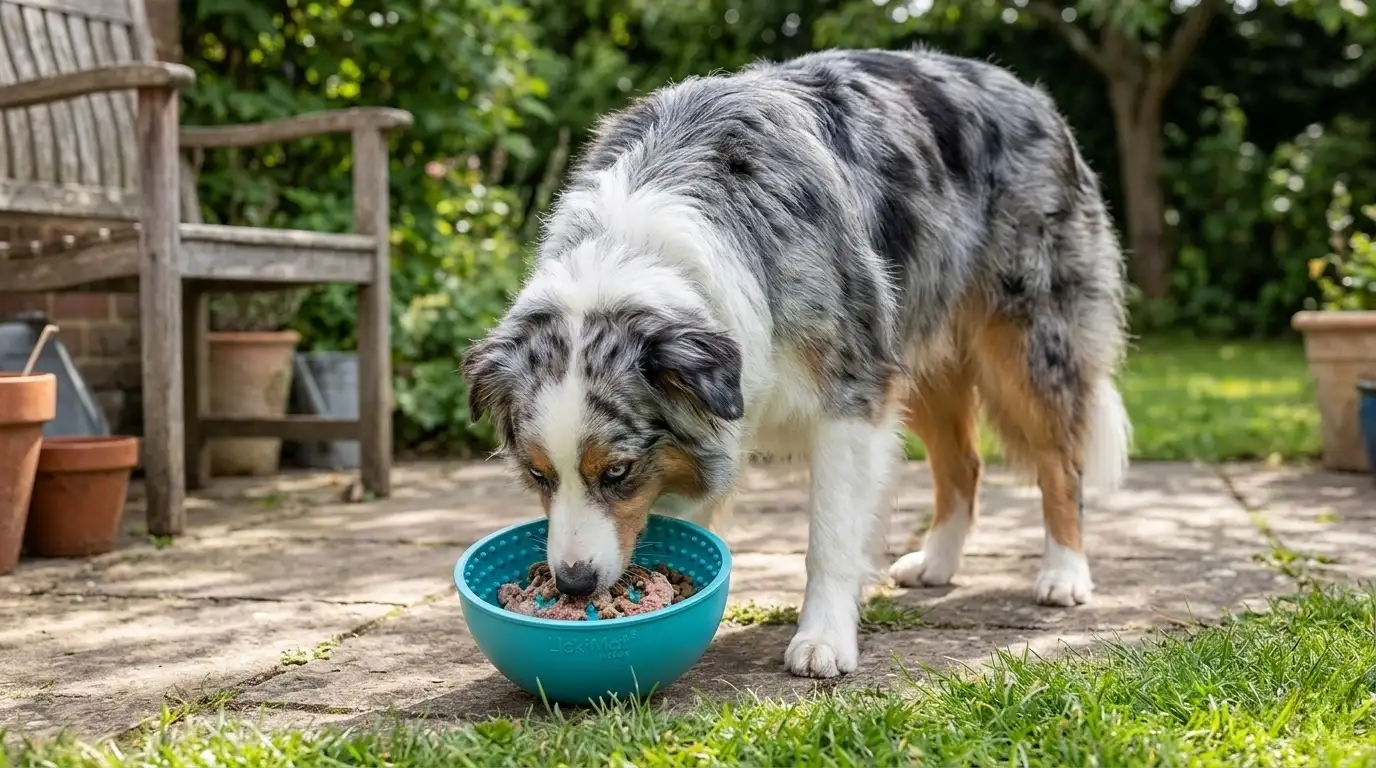
The LickiMat Wobble uses a domed wobble base that rocks as your dog eats, making it impossible to rush through a meal. It is the best slow feeder dog bowl for wet food, holding pate and soft food in small surface pockets that dogs must lick out one section at a time. The licking motion has a calming effect, making it especially useful for anxious dogs around mealtimes. It is made from food-grade silicone and is fully dishwasher safe.
Why We Picked It
• Unique wobble motion adds an extra layer of mental enrichment beyond a standard bowl.
• Best option on this list for wet food, raw food, or spreadable treats.
Pros:
• Works with wet food, kibble softened in broth, peanut butter, and treats
• Wobble action provides mental stimulation and slows eating at the same time
• Food-safe silicone material, dishwasher safe
Cons:
• Not suitable for very large kibble sizes, which can get stuck
• The wobble base requires a flat non-carpeted surface for best results
Northmate Green Slow Feeder
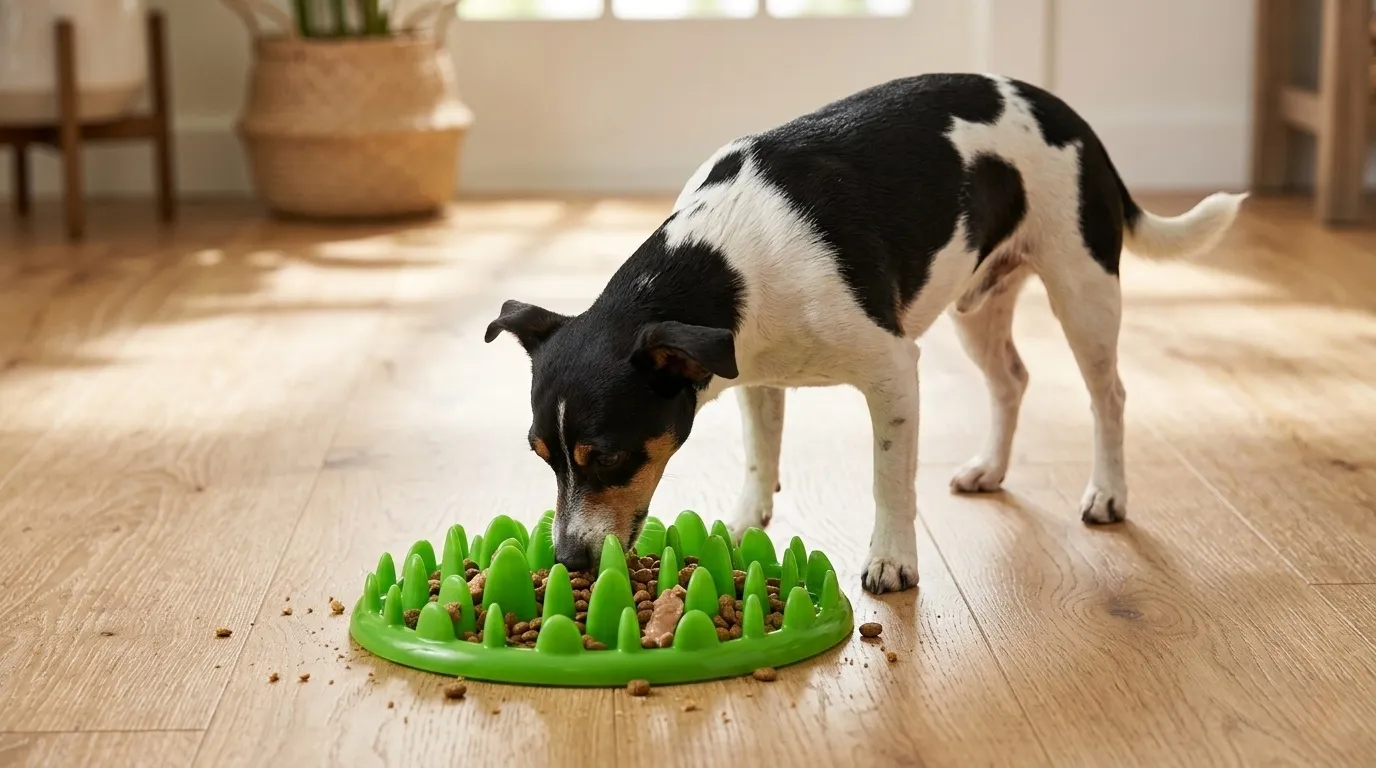
The Northmate Green Slow Feeder is built for large, high-energy breeds that have already figured out how to eat quickly around simpler maze bowls. Its tall grass-blade design forces dogs to forage through each blade to extract kibble, turning a dry food meal into a five to ten minute activity. The large surface area handles bigger portions and the heavy base stays put during aggressive eating. It is the most challenging feeder on this list and holds up well to daily use.
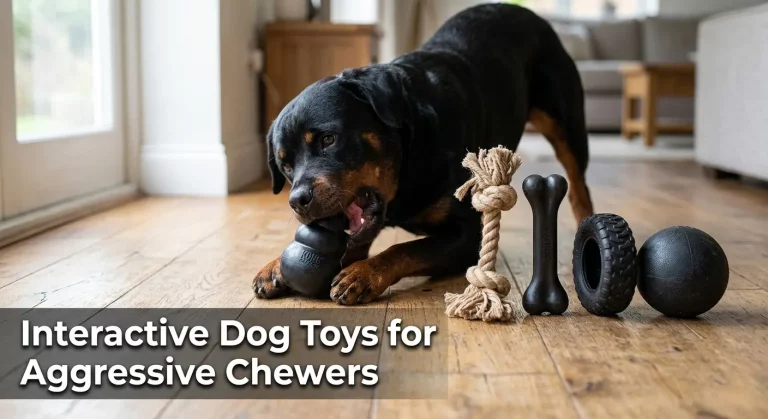
Pairing a slow feeder with enrichment activities at home leads to calmer, more satisfied dogs. Owners who already use interactive toys for mentally stimulating their dogs often find that combining enrichment feeding with other activities produces the best behavioral results.
Why We Picked It
• Tall grass-blade design is genuinely challenging, even for experienced fast eaters.
• Best capacity on this list, ideal for large breed households.
Pros:
• Excellent for large breeds including labs, German shepherds, and huskies
• Deep maze requires real foraging effort, providing strong mental enrichment
• Heavy stable base does not move during energetic eating
Cons:
• Tall blades require more thorough cleaning, best run through the dishwasher regularly
• The premium price makes it less accessible for budget-focused buyers
What Should You Look for in a Slow Feeder Dog Bowl?
A good slow feeder dog bowl should match your dog’s breed, size, eating style, and food type. The right bowl makes a noticeable difference within the first few meals.
Key things to consider:
• Size and maze depth: small dogs need shallower mazes, large dogs need deeper or wider designs
• Material safety: always choose BPA-free, food-safe plastic or silicone
• Non-slip base: essential for active or large dogs that push their bowls
• Ease of cleaning: dishwasher-safe models save significant time over the long run
• Food type compatibility: some bowls work better for dry kibble, others for wet or raw food
• Breed specific needs: flat-faced breeds need shallow wide designs to avoid breathing strain
Are Slow Feeder Dog Bowls Worth It?
Yes, slow feeder dog bowls are worth it for most dogs that eat too fast. Fast eating in dogs is linked to bloat (gastric dilatation and volvulus), regurgitation, excessive gas, and general digestive discomfort. Slowing down mealtime by even a few minutes reduces the air swallowed with each bite and gives the digestive system time to respond properly. Vets frequently recommend them for larger breeds and deep-chested dogs where bloat risk is higher.
Beyond digestion, the mental effort required to eat from a maze bowl provides real cognitive enrichment. Many dog owners report that their dogs seem calmer and more satisfied after eating from a slow feeder compared to a regular bowl.
How Do You Clean a Slow Feeder Dog Bowl?
Most slow feeder dog bowls are dishwasher safe on the top rack, which is the easiest method. For hand washing, use warm soapy water and a small bottle brush or toothbrush to work into the maze ridges. Dry food tends to be easier to clean out than wet food. Bowls used for wet food or raw diets should be cleaned after every single meal to prevent bacterial buildup in the grooves.
Avoid harsh abrasive scrubbers that can scratch the surface of plastic bowls, as scratches create grooves where bacteria can accumulate. Replace a bowl if you notice deep scratches, cracks, or discoloration.
Slow Feeder Dog Bowl Buying Guide
Size Considerations:
Choose a bowl sized to hold your dog’s full meal with some room to spare. A bowl that is too small forces you to refill mid-meal, which defeats the purpose.
Material Quality:
Food-safe BPA-free plastic is the most common and most affordable. Silicone is a great option for wet food. Stainless steel slow feeders exist but are less common.
Safety Features:
Look for non-toxic materials, no sharp interior edges, and a non-slip base that prevents the bowl from becoming a tripping hazard.
Durability:
Thick-walled plastic and silicone models last longer than thin budget versions. Read reviews specifically mentioning long-term use.
Cleaning and Maintenance:
Dishwasher-safe models are the most practical for busy households. Deep maze designs require more attention during cleaning.
Age Suitability:
Puppies and senior dogs benefit from shallower maze designs that are easier to navigate. High-energy adult dogs can handle deeper and more complex patterns.
If your dog has particular food-related habits that go beyond eating speed, our guide to feeding picky dogs covers how to build consistent and stress-free meal routines that work alongside enrichment tools like slow bowls.
Frequently Asked Questions
What is the best slow feeder dog bowl for dogs?
Do vets recommend slow feeder dog bowls?
Are slow feeder dog bowls worth it?
What is the 15 minute rule for dog food?
Final Verdict: Which Slow Feeder Dog Bowl Should You Buy?
Our Top Recommendations
• Best Overall: Outward Hound Fun Feeder Slo Bowl: reliable, size-inclusive, and dishwasher safe.
• Best Budget Option: JASGOOD Slow Feeder Bowl: solid performance at an entry-level price.
• Best for Flat-Faced Breeds: Neater Feeder Slow Feed Bowl: shallow wide design built for brachycephalic dogs.
• Best for Wet Food: LickiMat Wobble: excellent for wet food, treats, and anxious dogs.
• Best for Large Breeds: Northmate Green Slow Feeder: maximum challenge for big, determined eaters.
For most dog owners, the Outward Hound Fun Feeder is the best place to start. It handles dry kibble extremely well, fits most breed sizes, and is easy enough to clean that you will actually keep using it. If you have a flat-faced breed or rely on wet food, step toward the Neater Feeder or LickiMat Wobble instead.
Leave a comment