

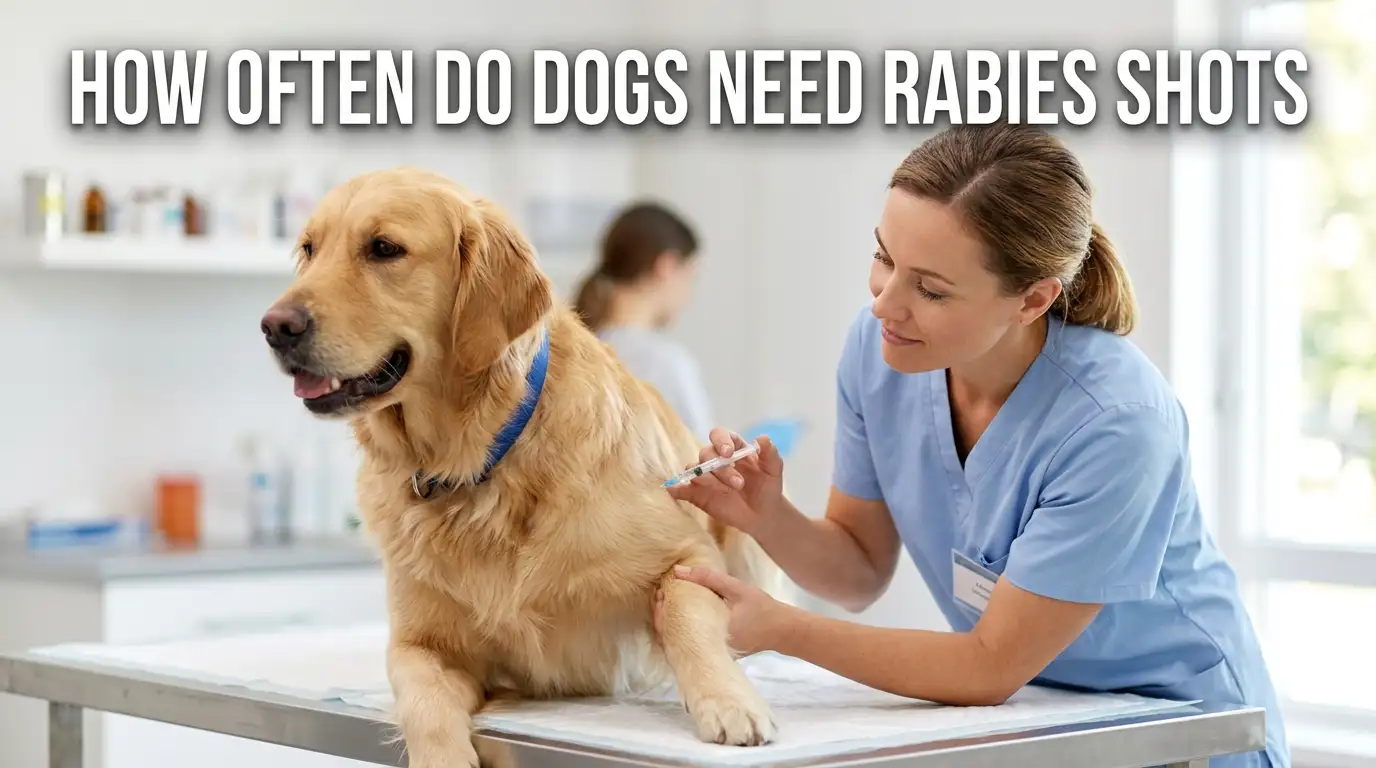
Most dogs need a rabies shot every one to three years, depending on the vaccine type used and the laws in your state. Puppies get their first rabies vaccine between 12 and 16 weeks of age, followed by a booster exactly one year later. After that first booster, your veterinarian and local regulations together determine whether your dog is on a one-year or three-year schedule going forward.
Rabies is one of the most serious diseases a dog can contract, and it remains a public health concern across much of the United States. Understanding how often dogs need rabies shots is not just about protecting your pet. It is also a legal requirement in all 50 states, and the exact schedule depends on several factors that many pet owners do not fully understand. This guide covers everything a dog owner needs to know, from your puppy’s first injection to your senior dog’s ongoing needs. If you are building out everything a new dog owner needs, knowing the vaccination timeline is an essential first step.
The Standard Rabies Vaccination Schedule for Dogs
The standard schedule follows three distinct stages, and every dog owner should know each one.
1. First vaccine: 12 to 16 weeks of age
Most vets administer the first rabies vaccine when a puppy is between 12 and 16 weeks old. Some states legally require it by 12 weeks. This first shot is always labeled as a one-year vaccine, regardless of brand.
2. One-year booster: 12 months after the first shot
Every dog receives a booster exactly one year after their first rabies vaccine. This is non-negotiable and is required by law in nearly every state, even if the vaccine type used is technically labeled as a three-year product.
3. Ongoing boosters: every one to three years
After the one-year booster, your dog enters a maintenance schedule. Whether that is annual or every three years depends on the vaccine your vet uses and the laws in your county or state.
One-Year vs Three-Year Rabies Vaccines: What the Difference Actually Means
Both the one-year and three-year rabies vaccines contain the same antigen and produce the same level of immune protection. The difference is not in the formula. It is in how each product was studied and approved.
Vaccine manufacturers must conduct duration-of-immunity studies to earn FDA approval for a specific label claim. A vaccine labeled as a three-year product has been tested and proven to maintain protective antibody levels for 36 months. A one-year product has only been tested to 12 months, even if it likely lasts longer in practice.
| Factor | One-Year Vaccine | Three-Year Vaccine |
|---|---|---|
| Antigen content | Identical | Identical |
| FDA duration approval | 12 months | 36 months |
| Puppy first dose label | One-year | One-year (always) |
| After one-year booster | Annual boosters required | Booster every 3 years |
| Legal recognition | All 50 states | Most states (check locally) |
| Vet preference drivers | Cost, local law, patient history | Reduced injection frequency |
Some states have not legally adopted the three-year label, meaning even if your vet uses a three-year product, your local law still requires annual boosters. Always check your county regulations alongside what your vet recommends.
State Laws and Local Regulations Affect Your Dog’s Rabies Schedule
Rabies vaccination law in the United States is set at the state level, and sometimes at the county or municipal level. This creates real variation from one zip code to the next.
For example, most states accept the three-year rabies vaccine after the one-year booster is complete. However, some counties within those same states have their own ordinances requiring annual vaccination. Urban areas with higher wildlife density sometimes impose stricter local rules than state law requires.
Here is what you should check:
- Your state’s animal control or department of agriculture website for the official rabies law
- Your county animal services office, since local rules can be stricter than state rules
- Your vet, who will know what certificate format your county legally accepts
- The National Association of State Public Health Veterinarians, which publishes a compendium of animal rabies prevention and control updated regularly
Factors That Can Change How Often Your Dog Needs a Rabies Shot
Beyond vaccine type and state law, a handful of personal factors can affect your specific dog’s schedule.
Dogs With Unknown Vaccination History
Adopted and rescued dogs often arrive without verifiable records. In most states, a dog with no documented rabies history is treated as unvaccinated regardless of age. Your vet will restart the schedule with an initial shot followed by a one-year booster, then transition to the standard ongoing schedule.
Outdoor and High-Exposure Dogs
Dogs that spend significant time outdoors, especially in rural or wooded areas, are at higher risk of encountering rabid wildlife such as raccoons, bats, foxes, and skunks. For these dogs, staying strictly current on vaccinations is especially important. Even a current three-year vaccine may not protect after an exposure if the titre level has fallen below threshold.
Dogs Living in High Wildlife Density Areas
Bats represent the most common source of rabies exposure for both pets and people in the United States. A dog that has contact with a bat, even indoors, may require a booster or observation period even if currently vaccinated. Always report wildlife contact to your vet promptly.
When Puppies Get Their First Rabies Vaccine
Puppies cannot receive the rabies vaccine before 12 weeks of age because their immune systems are not mature enough to mount a reliable response before that point.
Most vets schedule the rabies vaccine at the same visit as other core vaccines, typically during the 12-week or 16-week puppy visit. After the initial shot, the puppy’s rabies protection is only legally valid for 12 months, which is why that one-year booster is mandatory.
Until your puppy has completed at least the first rabies vaccine, be cautious about contact with unvaccinated or unknown dogs and wildlife. Keep outdoor exposure supervised and limit interactions with animals whose vaccination status you cannot verify.
Senior Dogs and Rabies Vaccination: What Changes After Age 10
Most competitors skip this topic entirely, but it is one of the most common questions from owners of older dogs. The short answer: yes, senior dogs still need rabies shots, and most states have no age exemption in their laws.
That said, there are important nuances for older pets:
- Some vets recommend running a rabies antibody titre test to confirm protective immunity levels before revaccinating an older dog with health concerns
- A few states allow a licensed veterinarian to issue a medical exemption for dogs with documented conditions that make vaccination a significant health risk, such as severe autoimmune disease or a history of anaphylaxis to the vaccine
- Medical exemptions are rare, legally limited, and must be renewed regularly; they do not permanently excuse a dog from rabies vaccination requirements
- Even with an exemption, most counties require the owner to keep the dog under strict supervision and to notify animal control
Traveling With Your Dog and Rabies Vaccine Requirements
Rabies certificates matter beyond your home state. Whether you are crossing state lines or flying internationally, your dog’s vaccine status affects what you can do.
Interstate Travel
Most states require a Certificate of Veterinary Inspection (CVI) for dogs crossing state lines. Nearly every state includes proof of current rabies vaccination as part of that requirement. Some states also require the USDA-endorsed health certificate format. Your vet can prepare this, but it requires advance scheduling, typically within 10 to 30 days of travel.
International Travel
International requirements vary significantly. Many countries accept a current rabies certificate, while others require a rabies antibody titre test to confirm your dog’s immune response meets a minimum threshold. The titre test must typically be done by an approved laboratory and often at least 30 days before travel, with results valid for a set window. Some destinations require this test to be done after your dog’s most recent vaccination.
If you are planning to bring your dog on a flight, read up on traveling with your dog by air well in advance, since most airlines and destination countries have their own documentation requirements on top of the rabies certificate.
How to Read Your Dog’s Rabies Vaccination Certificate
Most dog owners do not look closely at their rabies certificate until they actually need it, which is often the wrong moment to discover something is missing. Here is what a valid certificate should include:
- Your dog’s name, breed, sex, age, and weight at the time of vaccination
- The vaccine manufacturer name and product name
- The lot number and serial number of the vaccine used
- The date the vaccine was administered
- The date the next booster is due, based on local law and the vaccine label
- Your veterinarian’s name, clinic address, signature, and license number
- A rabies tag number that corresponds to the tag on your dog’s collar
If any of these fields are incomplete or if the dates are unclear, ask your vet to issue a corrected certificate before you need it for travel or a licensing renewal. Animal control and border officials require complete documentation.
Common Myths About Rabies Shots in Dogs
| Myth | The Truth |
|---|---|
| My indoor dog does not need a rabies vaccine | Rabies vaccination is required by law for all dogs in the US regardless of lifestyle. Bats can enter homes, and an indoor dog can still escape. There is no indoor-only exemption. |
| One rabies shot lasts a lifetime | No single rabies vaccine provides lifetime protection. Immunity wanes over time and booster shots are required throughout your dog’s life. |
| The three-year vaccine is stronger than the one-year vaccine | Both vaccines contain the same antigen. The three-year label reflects duration-of-immunity study data, not a more potent formula. |
| Rabies vaccines cause more harm than good | Serious adverse reactions to rabies vaccines are rare. The risk of unvaccinated dogs contracting or spreading rabies far outweighs the small risk of a vaccine reaction. |
| A dog that has been vaccinated cannot get rabies | Vaccination dramatically reduces the risk but does not provide absolute immunity in every case. A vaccinated dog exposed to rabies still needs prompt veterinary attention. |
Signs Your Dog Had a Reaction to the Rabies Vaccine
Most dogs tolerate the rabies vaccine with minimal side effects. Knowing what is normal versus what requires a vet call helps you respond appropriately.
Normal Mild Reactions
- Soreness or swelling at the injection site for one to two days
- Mild lethargy or reduced appetite for 24 hours
- Low-grade fever
- Sleeping more than usual the day of vaccination
Signs That Require Immediate Veterinary Contact
- Facial swelling or hives appearing within 30 to 60 minutes of the shot
- Vomiting or diarrhea starting shortly after vaccination
- Difficulty breathing or pale gums
- Sudden extreme weakness or collapse
- A lump at the injection site that persists beyond three weeks
When to Contact Your Veterinarian About Rabies Vaccination
Contact your vet before or shortly after your dog’s next scheduled rabies booster if any of the following apply:
- Your dog had a previous adverse reaction to a rabies vaccine
- Your dog is being treated for cancer or an autoimmune disease
- Your dog is taking long-term immunosuppressive medications such as corticosteroids
- Your dog is pregnant or recently gave birth
- You are unsure of your dog’s vaccination history and need guidance on restarting the schedule
- Your dog had contact with a wild animal and you are unsure whether the bite broke the skin
Alongside vaccination, preventive dental care and grooming are part of keeping a healthy dog. Routines like brushing your dog’s teeth regularly reduce the risk of systemic illness that can complicate your dog’s vaccine tolerance. A healthy dog with good baseline care typically handles vaccines without difficulty.
Conclusion
Understanding how often dogs need rabies shots comes down to three things: the vaccine type your vet uses, the laws in your state and county, and your individual dog’s health and history. Most dogs receive their first shot between 12 and 16 weeks, a mandatory one-year booster, and then annual or triennial boosters depending on local law.
Staying current on rabies vaccination protects your dog, your family, and your community. It also protects you legally. An overdue dog faces serious consequences if any exposure or bite incident occurs. Mark the due date on your calendar, keep your dog’s certificate in a safe place, and confirm your local rules whenever you move or travel.
Every dog is different, and your veterinarian is your best resource for building the right vaccination schedule for your pet’s specific age, health status, and lifestyle. When in doubt, call your vet before skipping or delaying any booster.
FAQ Section (PAA Optimized)
Do dogs need a rabies shot every year?
Not always. Dogs vaccinated with a three-year rabies vaccine and living in a state that recognizes it are only legally required to be boostered every three years after the initial one-year booster. Dogs in states with annual requirements or vets using one-year products need yearly shots.
How long is a dog rabies vaccine good for?
A one-year vaccine is legally valid for 12 months from the date of administration. A three-year vaccine is valid for 36 months. In both cases, the first vaccine after a puppy’s initial shot is always treated as a one-year booster.
What happens if I don’t vaccinate my dog every year?
If your dog is on an annual schedule and you miss a booster, their legal vaccination status lapses. This can result in fines, quarantine if a bite or exposure occurs, and legal liability. Catching up quickly with your vet is the right step.
How often must a dog be vaccinated for rabies?
All dogs in the US must receive an initial rabies vaccine and a one-year booster. After that, the frequency depends on state and local law, and the vaccine product used. Most schedules require either annual or every-three-year boosters.
Does a 12 year old dog still need vaccinations?
Yes. There is no age at which rabies vaccination is legally waived in the US. Senior dogs still require current rabies vaccine status. However, your vet may recommend titre testing or, in rare medical cases, pursue a formal exemption through your local health authority.
Can a dog still get rabies if vaccinated?
Vaccination dramatically reduces the risk, but no vaccine provides 100% guaranteed immunity in all situations. A vaccinated dog that is bitten by a rabid animal should receive an immediate veterinary booster and be monitored closely per your vet’s guidance.