
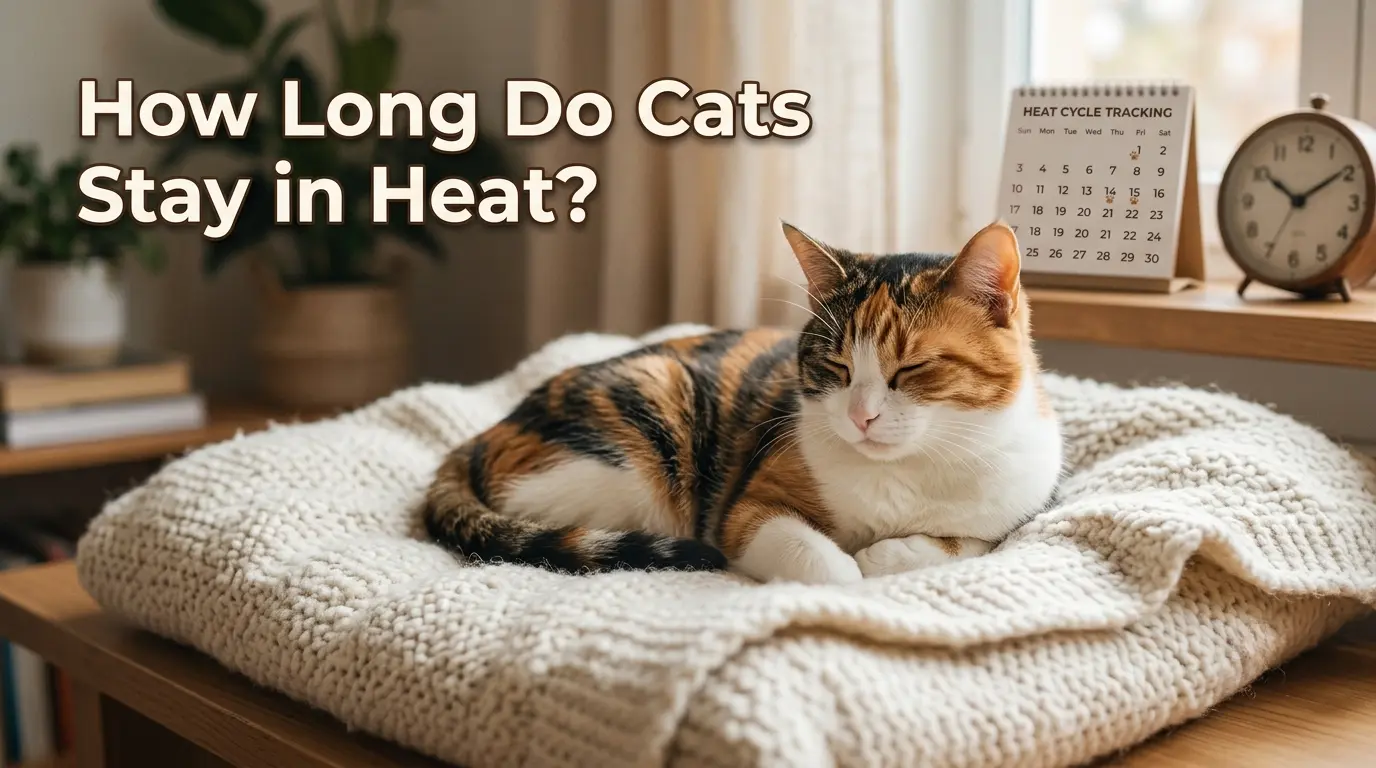
Cats typically stay in heat for about seven to ten days, though a heat cycle can last anywhere from three days to over two weeks. If a female cat does not mate during this time, she will usually go back into heat again within one to three weeks. Unspayed cats can repeat this cycle throughout the breeding season until they are spayed or become pregnant.
How Long Do Cats Stay in Heat on Average
A single heat cycle in cats usually lasts between seven and ten days. Some cats show signs for as few as three days, while others can stay in heat for two weeks or longer.
The exact length depends on the individual cat, her age, and whether she mates during the cycle. Because timelines vary so much, it is helpful to track behavior changes on a calendar so you know what is normal for your specific cat.
What a Full Heat Cycle Looks Like
A complete feline heat cycle, known as estrus, includes several stages beyond just the visible signs. Understanding each stage helps explain why symptoms seem to come and go.
Proestrus
This early stage lasts about one to two days. Your cat may show mild restlessness, but the most obvious heat behaviors have not started yet.
Estrus
This is the main heat stage most owners notice, typically lasting six to ten days. Vocalizing, rolling, raised hindquarters, and increased affection are common during this phase.
Interestrus
If mating does not occur, the cat enters a rest period of about one to three weeks before the cycle begins again. During this time, signs of heat disappear completely.
Anestrus
This is a longer resting phase, often occurring in the fall and winter months in some regions, when a cat does not cycle at all.
Signs Your Cat Is in Heat
Cats show a distinct set of behaviors when they are in heat, and recognizing them helps you understand what your cat is experiencing.
- Loud, persistent yowling or crying, especially at night
- Rolling on the floor and rubbing against furniture or people
- Raising the hindquarters when petted near the lower back
- Increased affection or clinginess toward owners
- Frequent attempts to escape outside to find a mate
- Reduced appetite during peak heat days
- Frequent urination or spraying to mark territory
How Often Do Cats Go Into Heat
Cats are seasonally polyestrous, which means they can cycle repeatedly throughout the breeding season if they do not become pregnant. In many climates, this season runs from early spring through late fall, though indoor cats exposed to artificial light can cycle year round.
If mating does not happen, a cat typically returns to heat every one to three weeks until she is spayed or becomes pregnant. This is why unspayed cats can seem to be in heat frequently during warmer months.
What Affects How Long a Cat Stays in Heat
Several factors influence the length and intensity of a heat cycle, so no two cats experience it exactly the same way.
- Age: kittens in season and older cats may have shorter or less predictable cycles
- Breed: some breeds are known for more frequent or intense cycles
- Access to a male cat: mating can shorten the active heat phase
- Daylight exposure: longer daylight hours can trigger more frequent cycling
- General health and body condition
Kittens and the First Heat Cycle
A kitten in season can begin her first heat cycle as early as four to six months old, though this can vary by breed and individual development. First cycles are sometimes shorter or less obvious than cycles in adult cats.
If you are still learning the basics of caring for a new kitten, our first time cat owner checklist covers the essentials every new owner should know before their kitten reaches maturity.
How to Keep Your Cat Comfortable During Heat
While heat is a natural process, there are practical ways to help your cat stay calm and safe during this time.
- Keep your cat indoors to prevent unwanted mating and reduce escape attempts.
- Provide a quiet, comfortable resting space away from household noise.
- Offer extra gentle affection, since many cats seek more attention while in heat.
- Use interactive toys to redirect restless energy in a positive way.
- Avoid punishing vocal or clingy behavior, since it is a normal biological response.
A cozy, familiar space can make a real difference during heat. Take a look at choosing a comfortable cat bed if your cat needs a calmer place to settle down.
Common Mistakes Owners Make During a Cat Heat Cycle
- Letting the cat outdoors unsupervised, which risks unwanted pregnancy
- Assuming the yowling means the cat is in pain or sick
- Waiting too long to schedule a spay because the cycle seems mild
- Handling the cat roughly out of frustration with vocal behavior
Behavior Changes Beyond the Heat Cycle
Sometimes owners notice mood changes in their cat that do not seem to match a typical heat cycle. If your cat seems withdrawn, low energy, or uninterested in normal activities outside of heat behavior, it is worth learning more about feline emotional wellbeing.
Our article on recognizing depression in cats explains the signs to watch for and when a mood change may need veterinary attention.
Grooming and Hygiene During Heat
Cats in heat may groom themselves more frequently around the tail and hindquarters. Gentle at home care can support their comfort during this time. If grooming near the ears has been overdue, learn how to clean a cat’s ears safely through a gentle, low stress method.
For cats who resist baths, our tips on bathing a cat that hates water can help make routine hygiene less stressful for both of you.
When Home Care Is Enough
Mild vocalizing, rolling, and clinginess are normal and usually do not require a veterinary visit. Keeping your cat indoors and comfortable is typically all that is needed until the cycle passes.
When to Contact a Veterinarian
Certain signs during or after a heat cycle are not typical and should be evaluated by a veterinarian.
- Heat cycles that last longer than three weeks without stopping
- Signs of pain, discharge with a strong odor, or lethargy
- No signs of heat ever occurring after six to seven months of age
- Suspecting pregnancy after accidental mating
A veterinarian can also confirm the best age and timing for spaying based on your cat’s individual health.
Spaying and the End of Heat Cycles
Spaying is the only permanent way to stop heat cycles in cats. Many veterinarians recommend spaying around five to six months of age, though it is never too late to spay an adult cat that has already gone through multiple cycles.
Spaying not only ends the heat cycle but also reduces the risk of certain reproductive health issues later in life. Your veterinarian can advise on the right timing based on your cat’s breed, weight, and overall health.
Myths Versus Facts About Cat Heat Cycles
| Myth | Fact |
|---|---|
| A cat must go through one heat cycle before being spayed. | Cats can be safely spayed before their first heat cycle. |
| Heat cycles always follow an exact schedule. | Timing varies between cats and can be influenced by light and season. |
| Yowling always means a cat is in pain. | Loud vocalizing is a normal heat behavior, not a sign of injury. |
| Indoor cats never go into heat. | Indoor cats can still cycle, especially with artificial light exposure. |
Final Thoughts on Cat Heat Cycles
Understanding how long cats stay in heat helps you respond calmly and confidently when your cat starts showing these normal behaviors. Most heat cycles last about seven to ten days and can repeat every few weeks until a cat is spayed or becomes pregnant.
Every cat is a little different, and cycle length can vary based on age, breed, and environment. If anything about your cat’s heat cycle seems unusual or concerning, a veterinarian is always the best resource for guidance tailored to your cat’s health.
Frequently Asked Questions
When do cats go into heat?
Most cats have their first heat cycle between four and six months of age, though this can vary by breed.
How do you know when a cat’s heat is over?
Vocalizing, rolling, and affection seeking behavior stop, and the cat returns to normal calm behavior until the next cycle.
Is it painful for a cat in heat?
Heat is not typically painful, though it can cause restlessness and discomfort from hormonal changes.
What is the 3 3 3 rule for cats?
The 3 3 3 rule usually refers to newly adopted cats needing three days to decompress, three weeks to settle in, and three months to feel fully at home, rather than the heat cycle itself.
Is 2 years old too late to spay a cat?
No, a cat can be spayed safely at 2 years old or older, though your veterinarian may recommend extra pre surgical checks for an adult cat.