
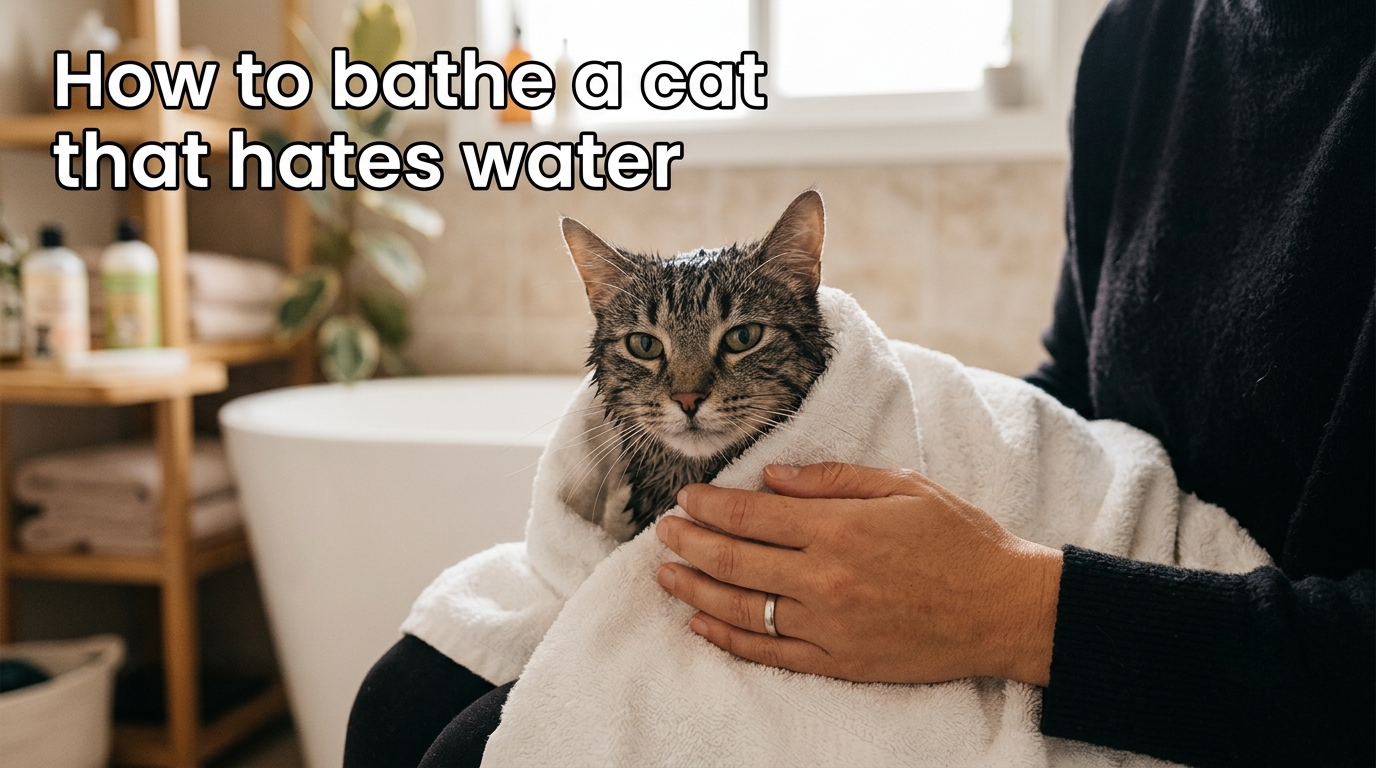
Most cats dislike baths, but knowing how to bathe a cat that hates water makes the whole process calmer and safer for both of you. The key is preparation: warm water, a non-slip surface, cat safe shampoo, and a slow gentle approach. We have tested these steps on cats that would rather scratch their way out of the room, and the method below genuinely works.
Supplies to Gather Before the Bath
Getting everything ready before you start is the most important step. If you leave the cat to grab something mid bath, stress levels spike fast.
- Cat safe shampoo (never use human shampoo or dish soap on a cat)
- A non slip mat for the sink or tub
- A plastic pitcher or detachable shower head on a low setting
- Two dry towels warmed slightly in a dryer
- A cotton ball to protect each ear from water
- Treats for calm reward moments during and after the bath
- A second person to help hold a resistant cat if possible
If your cat is prone to scratching, trim claws a day before the bath. You can find gentle trimming tips in our guide on grooming tools for long haired cats.
Step by Step: Bathing a Cat That Hates Water
Follow these steps in order. Rushing any stage will make your cat more resistant next time.
Step 1: Tire Your Cat Out First
Play with your cat for ten to fifteen minutes before the bath. A tired cat is a calmer cat. A wand toy or a short chase session burns off the anxious energy that makes bath time harder.
Step 2: Brush Before Getting Wet
Brush out any tangles or loose fur before the bath. Wet tangles are much harder to remove and can hurt your cat. This step also settles your cat into a familiar grooming routine before the water appears.
Step 3: Prepare the Bath Space
Fill a sink or small tub with a few inches of warm water, around the same temperature you would use for a baby. Place the non-slip mat in the bottom so your cat feels secure. Lay your towels within reach and have treats ready.
Step 4: Ease the Cat Into the Water
Lower your cat gently into the water, keeping your movements slow and your voice calm and quiet. Do not hold your cat forcefully. Let the paws touch the water first. If your cat starts to panic, take a break and try again rather than forcing the process.
- Speak in a low, even tone throughout.
- Avoid pouring water directly on the face or head.
- Keep one hand gently on the scruff for security, not restraint.
Step 5: Wet the Coat and Apply Shampoo
Use a pitcher or low pressure spray to wet your cat’s coat from the neck down. Apply a small amount of cat safe shampoo and work it into a lather starting at the neck, moving toward the tail. Keep shampoo away from the eyes, nose, ears, and mouth.
Step 6: Rinse Thoroughly
Rinse every trace of shampoo out of the coat. Shampoo residue left on the skin is a common cause of irritation and flaking. Use the pitcher or gentle spray and run your fingers through the fur to check nothing is left behind.
Step 7: Dry Quickly and Gently
Wrap your cat in a warm towel immediately and press, do not rub, to absorb the water. Most cats tolerate a light squeeze inside a towel better than vigorous rubbing. Replace the first towel with a dry one once it is saturated.
- Keep your cat in a warm room until fully dry.
- A blow dryer on the lowest cool setting can be used if your cat tolerates the noise, but many find it frightening.
- Brush the coat again once slightly dry to stop tangles forming.
Sink, Tub, or Shower: Choosing the Right Space
Both can work, but the key difference is control. A sink gives you the closest reach and the most control for small or anxious cats. A tub gives more space but can feel overwhelming for the cat. A shower is rarely a good idea for a first bath because the overhead water spray is startling.
- Sink: best for kittens, small cats, or cats having their first bath.
- Tub: works well for large cats or when you have a second person helping.
- Handheld shower head: useful once your cat is comfortable with water.
- Standing shower: not recommended for cats that hate water.
Cleaning Your Cat Without a Full Bath
Cleaning a cat without water is a good option for cats with extreme water anxiety, elderly cats, or in between full baths. The most effective waterless options are dry shampoo sprays or foam, grooming wipes, and damp cloth wipe downs.
- Dry shampoo foam: massage into the coat, wait a moment, then brush out.
- Grooming wipes: ideal for spot cleaning paws, face, or a dirty area.
- Damp cloth: warm and wrung out, run slowly along the coat in the direction of the fur.
Waterless methods do not replace a full bath when a cat has been exposed to something toxic or strongly scented. In those cases a water bath is necessary.
Keeping a Resistant Cat Calm and Safe During the Bath
You should not fully immobilize a cat for a bath unless directed by a vet for a medical reason. Forcing a cat still increases fear and makes future baths harder. Instead, focus on calming techniques that reduce the need to hold the cat down.
- Scruff gently if the cat is in danger of hurting itself, but release as soon as it settles.
- Use a mesh cat bath bag for extremely resistant cats. These allow water through while limiting scratching.
- Have a second person hold treats at nose level to keep the cat focused forward.
- Keep the water shallow so the cat does not feel it is sinking.
If your cat’s water anxiety is severe, speak to your vet. A short term calming supplement or prescription may be recommended for cats that become dangerously stressed. You can also check our new pet owner hub for broader guidance on introducing cats to new routines.
Bath Frequency: Getting the Schedule Right
Most indoor cats need a bath only two to four times per year unless there is a specific health or hygiene reason. Overbathing strips the natural oils from your cat’s coat and can cause dry, flaky skin.
- Indoor shorthair cats: two to three times per year is usually enough.
- Indoor longhair cats: every four to six weeks may be needed to prevent matting.
- Cats with skin conditions: follow your vet’s specific advice.
- Outdoor cats: more frequent baths may be needed depending on how dirty they get.
After the Bath: Drying and Recovery
The moments after the bath matter as much as the bath itself. A calm, warm recovery builds a positive association that makes the next bath easier.
- Keep your cat in a warm, draught free room until the coat is completely dry.
- Offer treats and gentle play to reward calm behaviour.
- Brush the coat once partially dry to prevent tangles.
- Do not let the cat outside until fully dry, especially in cool weather.
If your cat is prone to fleas, a bath is a good time to apply or reapply protection. See our guide to the best flea collar for cats for options that work alongside regular bathing.
FAQ: How to Bathe a Cat That Hates Water
How do you bathe an unwilling cat?
Bathe an unwilling cat by preparing everything in advance, playing with the cat first to reduce energy, and using warm shallow water with a calm voice throughout. A mesh bath bag helps contain scratching. Keep the bath short and follow it immediately with treats and warmth.
How do you wash a cat that does not like water?
For a cat that does not like water, start with the shortest possible bath and use a low flow pitcher instead of a running tap or spray. Let the cat feel the bottom of the sink with all four paws before wetting the coat. Over several sessions, most cats become more tolerant.
How do you bathe a cat that has never been bathed before?
Introduce an unbathed cat to the sink or tub with a treat before bath day so the space is familiar. Keep the first bath under five minutes: wet, lather, rinse, dry, reward. Short positive experiences early in life make future baths far easier.
Is Dawn dish soap ok for a cat bath?
Dawn dish soap is not recommended for regular cat baths because it removes the natural oils from your cat’s coat and can cause skin irritation. A vet may suggest it in an emergency involving grease or an oil based toxin. For normal bathing, always use a shampoo made for cats.
How often should cats be bathed?
Most healthy indoor cats need a bath only two to four times per year. Long haired cats may need more frequent baths to prevent matting. If your cat grooms well and lives indoors, frequent baths are usually unnecessary and can irritate the skin.