
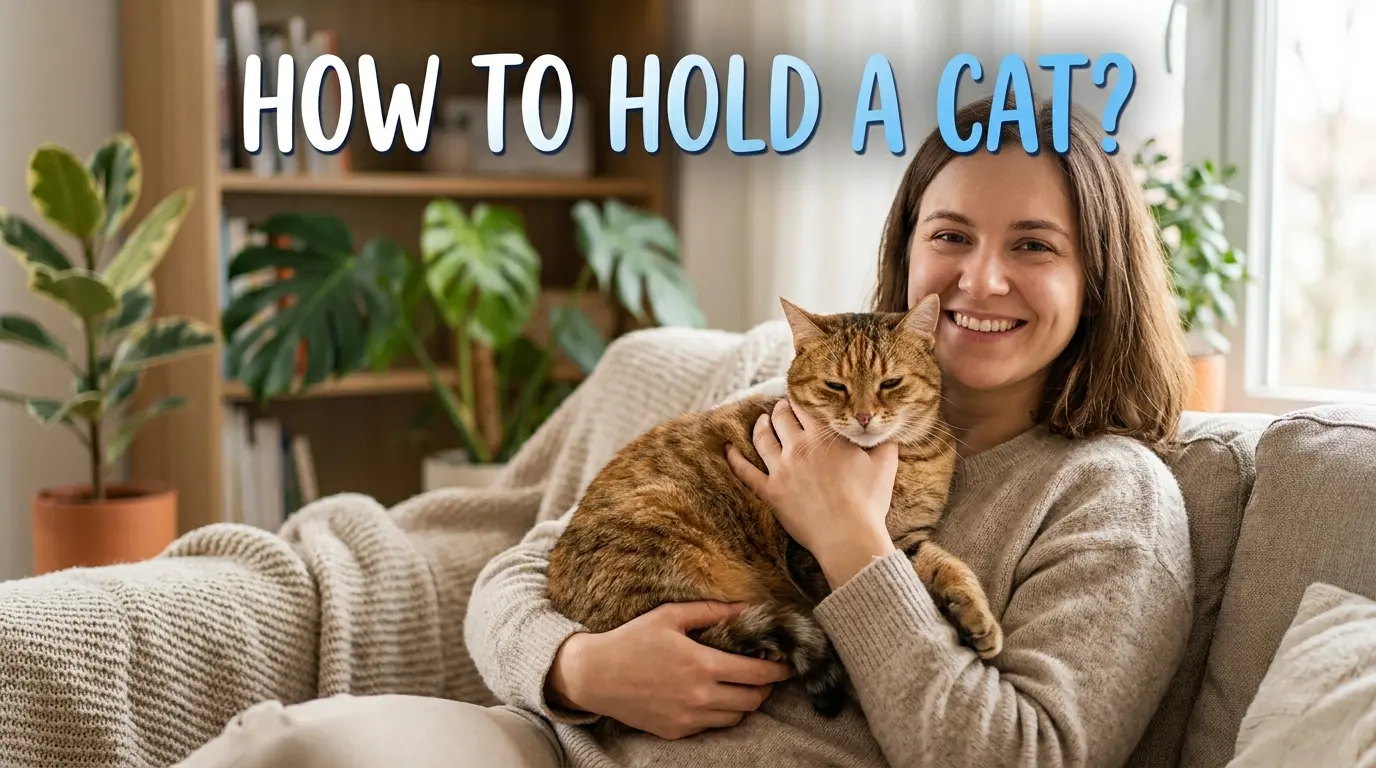
To hold a cat correctly, slide one hand under the chest just behind the front legs and place your other hand or forearm under the hindquarters so the full body weight is supported. Keep the cat close to your chest, stay calm, and release the moment you feel tension, resistance, or squirming. A cat held properly will settle quietly; a cat held incorrectly will claw its way out.
What your cat wants you to know is simple: control feels threatening, but support feels safe. Most cats do not resist being picked up because they dislike people. They resist because their back legs dangle, their belly feels exposed, or they were not given a moment to see it coming. A small shift in technique changes the entire experience for both of you.
Why Knowing How to Hold a Cat Matters
Cats are not naturally inclined to being lifted off the ground. In the wild, being grabbed from above signals a predator attack. When a cat goes stiff, digs its claws in, or vocalizes during handling, that reaction is instinctive, not personal. Understanding the mechanics of proper holding removes the guesswork and makes your cat far more likely to tolerate and even enjoy being picked up.
The most common mistakes owners make include grabbing the cat by the scruff without veterinary guidance, leaving the back legs unsupported so they kick and scratch, and holding on when the cat is clearly signaling that it wants down. Recognizing when your cat shows signs of stress or low mood can also help you judge whether a cat is ready for physical interaction at any given moment.
How to Pick Up a Cat Step by Step
Rushing the pick-up is the single biggest cause of scratching and resistance. A cat that sees your hand coming and has a second to sniff it is far less likely to panic than one that gets lifted without warning.
Follow these steps each time:
Step 1: Approach at the cat’s level
Crouch or sit rather than looming from above. A cat that sees you at eye level reads the approach as less threatening.
Step 2: Let the cat notice you first
Extend one hand and allow the cat to sniff. Wait for a blink, a slow eye close, or a nose touch before reaching further.
Step 3: Slide one hand under the chest
Place your dominant hand gently under the cat’s chest, just behind the front legs. Do not grip the ribs.
Step 4: Support the hindquarters immediately
As you begin to lift, bring your other hand or forearm under the back legs and rump. This is the most important step. Dangling back legs trigger panic in almost every cat.
Step 5: Draw the cat against your chest
Pull the cat in close so the body rests against your torso. The warmth and contact are calming. Keep the cat high enough that it feels secure, not dangling at arm’s length.
Step 6: Read the body and adjust
A relaxed cat will settle its weight into your arms. A tense cat will stiffen, pull forward, or tuck its ears. Adjust your grip or let the cat down calmly.
Where to Support a Cat’s Body When Holding
Think of it like carrying a bag of groceries with a soft bottom. The moment the base loses support, everything shifts and becomes unstable. For a cat, the equivalent is the back half of the body, which carries more muscle mass and feels the heaviest when unsupported.
The most reliable carry position for most cats is the football carry: the cat faces forward, rests its chest along your forearm, its belly is cradled against your side, and its back legs have a platform to push against. This gives the cat a sense of grounded security rather than open-air suspension.
For larger or less confident cats, a two-hand chest-and-rump cradle with the cat facing toward you offers maximum body contact and is the easiest position to hold calmly for more than a few seconds.
What to Avoid When Holding a Cat
Many owners instinctively squeeze tighter when a cat tries to escape. This is the exact wrong response. Tighter grip increases the cat’s panic and increases the chance of a scratch or bite. The correct response is to lower the cat gently and immediately.
| What to Avoid | Why It Causes Problems | What to Do Instead |
|---|---|---|
| Grabbing the scruff | Painful outside controlled clinical use; damages trust | Use the two-hand chest and rump support |
| Letting back legs dangle | Triggers instinctive kicking and panic immediately | Always support hindquarters from the first second |
| Squeezing tighter to retain | Increases stress and raises the chance of injury | Lower the cat gently and try again later |
| Forcing a hold on a hissing cat | A vocal cat is actively communicating refusal | Respect the signal and step back |
| Holding the cat away from your body | Removes the grounding contact that reduces anxiety | Keep the cat pressed gently against your chest or side |
How to Hold a Cat That Does Not Like Being Held
Start by rewarding the cat for letting you stroke it while it stays on the ground. Graduate to brief lifts of two to three seconds, then put the cat down before it signals discomfort. Combine handling sessions with treats. For cats that are highly resistant, the same patience applied when you leash train a cat for the first time will work equally well here: short sessions, no forcing, and always ending on a calm note.
Some cats will never enjoy being held for long stretches, and that is entirely normal. The goal is not to make your cat love being carried. The goal is to make necessary handling, such as getting into a carrier, visiting the vet, or managing grooming tasks, tolerable and free from trauma.
If you need to handle your cat for a grooming task such as ear cleaning, keeping the cat calm and well-positioned matters more than speed. The same technique used to hold your cat during a safe ear cleaning session applies directly: a secure, supported hold reduces head movement and makes the task easier for both of you.
Holding a Cat During Bathing and Grooming
Keep one hand firmly supporting the chest and hindquarters during any grooming task. A secure hold prevents sudden movement that causes accidental injury.
During bathing, the most important thing is minimizing the cat’s feeling of instability. A cat that feels it might slip will struggle far more than one that has firm footing. Knowing how to bathe a cat that hates water includes understanding exactly how to position your hands so the cat stays contained without being squeezed, which is one of the most useful holding skills to practise.
Keep sessions short. A three-minute bath with calm, confident handling causes far less stress than a ten-minute bath with constant struggle and readjustment. The same applies to any grooming task where you need to hold the cat in place.
Common Myths About Holding Cats
| Myth | Fact |
|---|---|
| Scruffing is a natural and safe way to carry cats | Scruffing is used by mother cats only to move very young kittens briefly. It is not a safe carry method for adult cats. |
| A struggling cat just needs to be held tighter | Tighter holds increase stress and injury risk. The correct response is to release. |
| Cats that resist handling are aggressive | Resistance is a communication signal, not a personality flaw. Better technique resolves most resistance. |
| Cats should tolerate being held for as long as needed | Cats have a finite tolerance for physical contact. Respecting this builds long-term trust. |
Frequently Asked Questions
How do you hold a cat that scratches?
Wrap the cat gently in a towel to cover the claws before picking it up. Support the body fully, stay calm, and keep the hold brief. Never grip harder to stop a scratch attempt.
Is it okay to hold a cat on its back?
Most cats do not like being held on their back because it exposes the belly and mimics a position of vulnerability. Some cats tolerate it briefly but watch closely for stress signals and do not force it.
How long can you hold a cat?
Most cats tolerate holding for one to five minutes depending on their temperament and comfort level with handling. Always let the cat signal when it is done rather than setting a fixed time limit.
Why does my cat go limp when held?
Some cats go limp as a learned stress response. This is not the same as relaxation. Look for wide eyes, a tucked tail, or tense muscles alongside the limpness to gauge the cat’s actual state.
How to hold a cat to cut its nails?
Wrap the cat in a towel with one paw exposed at a time. Hold the cat against your body with one arm and use your free hand to extend each toe. Keep each trimming session under two minutes to prevent resistance from building.